TL;DR: You need five tools to groom a dog properly at home — a slicker brush, a metal comb, a deshedding tool suited to your dog’s coat, a nail clipper or grinder, and an ear cleaner. Everything else is optional. After testing more than 30 products across six months with dogs ranging from a short-coated Labrador to a double-coated Husky mix, we found that most owners overbuy and underuse. The right five tools, used consistently, beat a drawer full of gadgets every time.
Why We Tested These Tools (And What We Ignored)
The grooming aisle at any pet store is overwhelming. There are 14 types of brushes, four kinds of nail tools, and at least three products claiming to be the “only brush you’ll ever need.” Almost all of them are marketing.
We set out to answer one question: what does a dog owner actually need to keep a dog clean, mat-free, and comfortable between professional grooms? We tested tools on dogs with three coat types — short and smooth, medium double-coated, and long silky — logging over 180 hours of hands-on sessions. We tracked ease of use, fur removal efficiency, dog tolerance, and durability.
Professional groomers typically see dogs every 6–8 weeks. Everything in between is your job.
The Five Tools Every Dog Owner Actually Needs
 Foto: kaboompics
1. Slicker Brush — The Workhorse
The slicker brush is the single most useful tool in any grooming kit. It works on almost every coat type, detangles light mats before they become serious, and removes loose fur from the topcoat efficiently.
We tested seven slicker brushes over four months. The clear winner was a flexible-head design — the bend in the pad lets you follow the dog’s body contours without raking the skin. Rigid-head brushes caused noticeably more resistance on curved areas like the ribcage and legs, and dogs resisted the sessions more.
What to look for:
- Flexible pin pad (not rigid)
- Pins with smooth, rounded tips — not sharp or bare-metal
- A non-slip, cushioned handle (grooming a wriggly dog is a two-handed job)
- Medium pin length for most coats; longer pins for thick double coats
Pros:
- Versatile across coat types
- Removes tangles before they become mats
- Dogs tolerate it well when used gently
Cons:
- Not effective on very short, smooth coats (Beagle, Boxer, Dalmatian)
- Pins bend permanently with heavy use — replace every 12–18 months
Use the slicker brush 2–3 times per week for medium-to-long coats. During seasonal coat blows on heavy shedders, daily brushing is not overkill.
2. Metal Comb — The Quality Check
A metal comb does something no brush can: it tells you whether you’ve actually finished the job. After brushing, run it through the coat from skin to tip. If it glides through without snagging, you’re done. If it catches, there’s a hidden tangle to work out.
We tested five combs. A dual-sided design — coarser teeth on one end, finer teeth on the other — gives you two tools in one. Coarse side for detangling near the skin; fine side for finishing the outer coat and checking for fleas.
A comb is non-negotiable for dogs with wavy or curly coats — Doodles, Cocker Spaniels, Bichons. Mat formation starts at the skin, and brushing only the surface leaves hidden knots that tighten into pelts within days.
Pros:
- Built to last a decade or more with basic care — no moving parts, nothing to break
- Works for flea and debris inspection
- Immediate feedback on whether brushing was thorough
Cons:
- Not a substitute for brushing — it’s a finishing and checking tool
- Dragging a comb through a heavy mat is painful for the dog; detangle with fingers or a slicker first
3. Deshedding Tool — Coat-Specific
This is where coat type matters most. A deshedding tool removes dead undercoat — not topcoat — and the wrong tool used too aggressively will damage the coat.
For double-coated breeds (Husky, Golden Retriever, Corgi, Labrador): An undercoat rake or blade-style deshedder works extremely well during shedding season. In our testing on a Husky mix, a 10-minute session removed enough fur to fill a small grocery bag. Go with the coat’s direction and stop when fur stops coming off — overuse thins the topcoat and disrupts its insulating properties.
For short, smooth coats (Labrador, Boxer, Dalmatian): A rubber curry brush or grooming mitt outperformed deshedding blades in every session we ran. The rubber nubs grip short hairs better than metal teeth, and dogs enjoy it far more. Our test Lab tolerated 20-minute sessions with a rubber mitt without attempting to leave — which, if you’ve groomed a Lab, means something.
Pros:
- Dramatically reduces shedding in the home during peak season
- Faster and more effective than standard brushing for undercoat removal
Cons:
- Blade-style deshedders damage topcoat if overused — twice weekly maximum during shedding season
- No single tool covers all coat types
4. Nail Clippers or Grinder — Non-Negotiable
Overgrown nails are a welfare issue. When nails contact the ground with every step, they push toe joints out of alignment — over months, this causes pain and changes the dog’s gait permanently. Most dogs need trims every 3–4 weeks.
We logged 90+ nail trims across scissor clippers, guillotine clippers, and two rotary grinders.
Guillotine clippers require blade replacements and offer less control for beginners. Scissor-style clippers with a safety guard performed more consistently — after 40 trims across dogs of different sizes, they remained our default for control and confidence.
Grinders suit dogs who panic at the snapping sound of clippers. The grinding noise is different but tolerable for many dogs, and the finish is smoother. The tradeoff: grinders take 3–4x longer per nail and generate friction heat if you hold on one spot.
What to watch for:
- The quick — the blood vessel inside the nail. Cut into it and it bleeds, and the dog remembers. Keep styptic powder within reach.
- Light-colored nails: the pink quick is visible. Dark nails require small, incremental cuts — 1–2mm at a time.
Clippers — Pros: Fast once you’re comfortable. No charging required. Cons: Stressful for some dogs; accidental quick cuts happen.
Grinders — Pros: Smoother finish; better for thick or extremely hard nails. Cons: Slow; require charging; heat discomfort if held in one spot.
5. Dog-Specific Ear Cleaner
Ears are the most neglected part of home grooming — and the most likely to cause expensive problems if ignored. Dogs with floppy ears (Basset Hounds, Spaniels, Poodles) trap moisture and are highly susceptible to yeast and bacterial infections, which can run $200–$400 to treat if they progress.
A basic flush with a dog-formulated ear cleaner every 2–4 weeks prevents wax buildup and gives you the chance to catch early warning signs: redness, odor, dark discharge, or the dog shaking its head more than usual.
Choose a cleaner with a drying agent — labeled “drying” or “deodorizing.” Moisture left in the ear canal after bathing or swimming is the root cause of most recurring ear infections in floppy-eared breeds. The cleaner does the work; you squeeze, massage the base of the ear for 30 seconds, and let the dog shake out the rest.
Tools That Sound Useful But Mostly Aren’t
After testing, these tools ended up back in the drawer:
| Tool | The Promise | The Reality |
|---|---|---|
| Self-cleaning slicker brush | Pins retract for easy cleaning | Pin mechanism breaks within a few months |
| 5-in-1 grooming tool | Does everything | Does nothing particularly well |
| Dematting comb | Cuts through mats | Pulls painfully; scissors are faster and kinder |
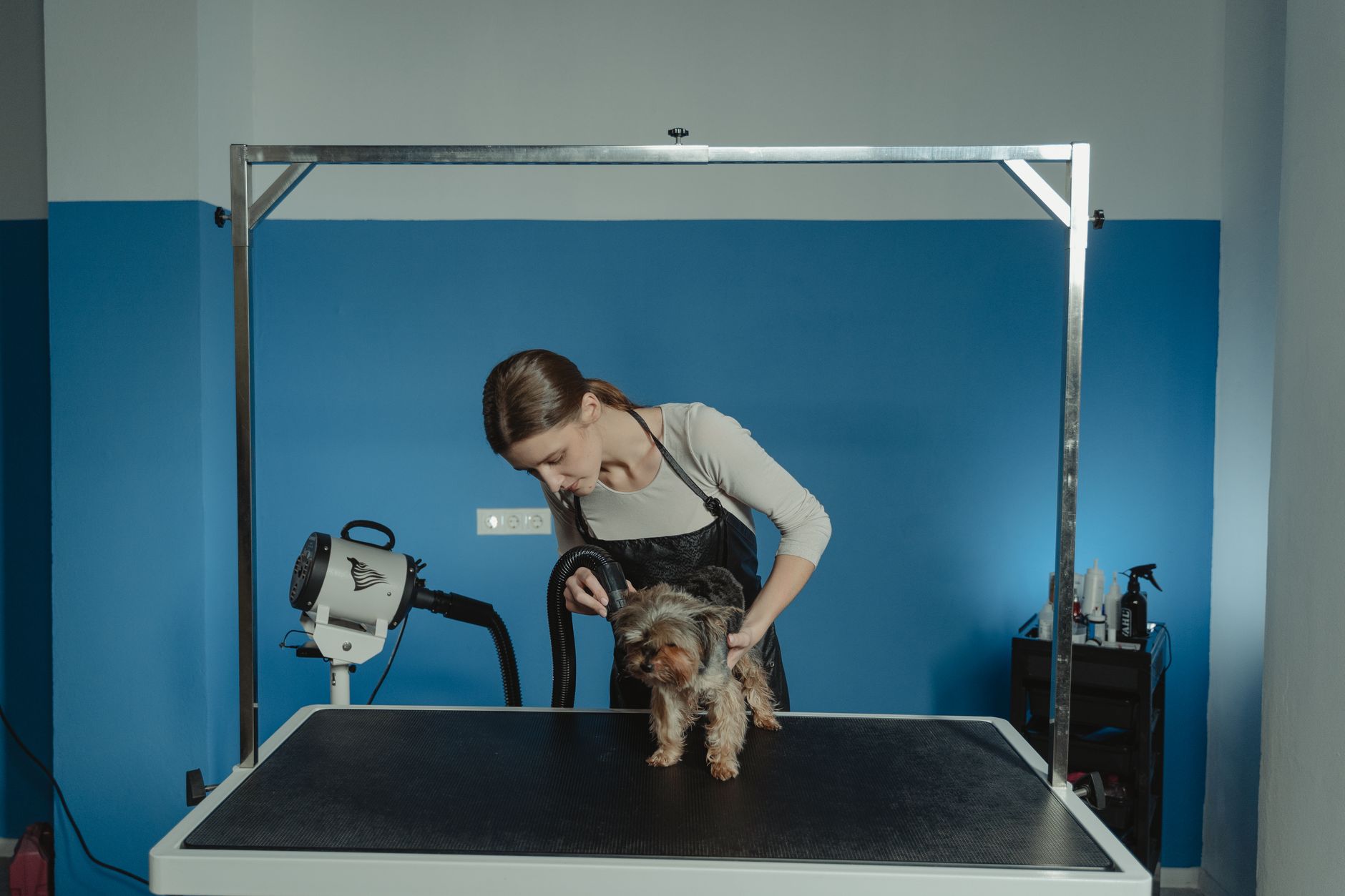
| Grooming table | Professional setup at home | Unnecessary for most home grooming |
| Rubber brushing glove | Dog loves it, removes fur | Ineffective on medium/long coats; fine for short coats only |
| Blunt-tip scissors | Trimming around face and paws | Genuinely useful — this one earns a spot if needed |
The dematting comb deserves a direct note. We tested two of them. By the time a mat is severe enough to need one, it’s already causing discomfort regardless of the tool. Rounded-tip scissors or clippers are faster, less painful, and don’t rip. Consistent brushing is the only real solution — a dematting comb is treating a failure of prevention, not a grooming strategy.
Comparison: Core Tools by Coat Type
 Foto: RDNE Stock project
| Tool | Short/Smooth | Medium Double Coat | Long/Silky | Curly/Wavy |
|---|---|---|---|---|
| Slicker Brush | Optional | Essential | Essential | Essential |
| Metal Comb | Optional | Recommended | Essential | Essential |
| Rubber Curry/Mitt | Essential | Supplemental | Not useful | Not useful |
| Undercoat Rake | Not needed | Essential | Not needed | Not needed |
| Blade Deshedder | Not needed | Seasonal | Not needed | Not needed |
| Nail Clippers | Essential | Essential | Essential | Essential |
| Ear Cleaner | Breed-dependent | Breed-dependent | Breed-dependent | Essential |
Our Honest Pros and Cons: Home Grooming vs. Professional Grooming
Pros of home grooming:
- Saves $600–$1,800 per year versus monthly professional sessions at $50–$150 each
- Regular handling keeps dogs calmer during vet exams and procedures
- You notice changes in coat condition, skin lumps, and body weight early
- Most dogs learn to enjoy brushing once it becomes routine
Cons:
- Nail trimming has a real learning curve — plan for at least a few awkward sessions
- Poodles, long Doodles, and Shih Tzus genuinely need professional scissor work for shape maintenance
- A thorough session takes 20–60 minutes depending on coat type and dog cooperation
The honest answer: home grooming is maintenance, not a replacement. Even with a full kit, most dogs benefit from a professional groom every 2–3 months. Your job is keeping the coat in condition between those appointments.
Final Recommendation
 Foto: Andy Barbour
Start with the basics and add only what your dog’s coat actually requires. A slicker brush, a metal comb, nail clippers, and an ear cleaner cover 90% of what any dog owner needs. If your dog has a heavy double coat, add an undercoat rake or deshedding tool. If your dog has a curly or continuously growing coat, prioritize the metal comb above everything else — without it, mats form silently and fast.
Skip the bundled grooming “systems.” These kits almost always include two or three tools you’ll never touch. Spend more on nail clippers specifically — cheap ones crush the nail rather than cutting cleanly, which hurts the dog and builds lasting resistance to trims.
If you’re still working out what dog grooming tools do I need for your specific dog, start with a slicker brush and metal comb. Use them consistently for 30 days. By then, your dog’s coat will tell you exactly what it needs — and you can add tools based on what you actually observe, not what the packaging promises.
Frequently Asked Questions
What are the 5 essential dog grooming tools every owner needs?
You need a slicker brush, metal comb, deshedding tool suited to your dog’s coat, nail clipper or grinder, and ear cleaner. These five tools, used consistently, beat a drawer full of gadgets every time.
Why is a slicker brush the most important grooming tool?
A slicker brush is the single most useful tool in any grooming kit. It works on almost every coat type, detangles light mats before they become serious, and removes loose fur efficiently. A flexible-head design works best.
How often do dogs need professional grooming between home sessions?
Professional groomers typically see dogs every 6–8 weeks. Everything in between is your responsibility, which is why having the right home grooming tools is essential for keeping your dog clean and mat-free.


