The article is in strong shape — only four Portuguese photo captions need correcting. Here is the corrected article:
Kidney disease is one of the most common serious illnesses in cats, particularly as they age. Studies suggest that up to 30–40% of cats over the age of 10 have some degree of chronic kidney disease (CKD). Certain breeds — including Persians, Abyssinians, and Maine Coons — carry a higher genetic risk, though no cat is immune. The real challenge? Cats are exceptional at hiding discomfort, and early symptoms are easy to dismiss as normal aging.
This list covers the six most telling signs your cat has kidney disease — ordered roughly by how early they tend to appear. Whether you’re concerned about a senior cat or a middle-aged one who’s been acting off, knowing what to look for can mean the difference between catching this early and managing it well, or missing a critical window.
1. Increased Thirst and More Frequent Urination
This is often the first sign owners notice — and one of the easiest to brush off. Your cat starts drinking more water than usual, hanging around the water bowl, seeking out the bathroom faucet, or batting at dripping taps. Meanwhile, the litter box fills up faster, with larger wet clumps or more frequent deposits.
Healthy kidneys concentrate urine. When kidney function begins to decline, that concentrating ability is one of the first things to go. The kidneys start producing large quantities of dilute urine, and the body tries to compensate by increasing thirst — a cycle called polyuria/polydipsia (PU/PD). It’s one of the earliest and most reliable red flags for kidney trouble.
Track your cat’s water intake if you’re unsure. A 10-pound cat typically drinks around 7–9 oz (200–250 mL) per day. Noticeably more than that, consistently, deserves a mention to your vet. Wet food masks how much a cat actually consumes — if your cat eats primarily dry kibble, increased water consumption becomes even more visible and measurable.
Acute vs. Chronic: Two Very Different Situations
Increased thirst shows up in both chronic kidney disease (CKD) and acute kidney injury (AKI), but they’re very different scenarios. CKD develops slowly over months or years, often without dramatic changes day to day. AKI — triggered by toxins like lily pollen, antifreeze, or certain antibiotics and NSAIDs — comes on fast and is a veterinary emergency.
If thirst increased practically overnight, or your cat suddenly can’t urinate at all, don’t wait for a scheduled appointment. Get to a vet or emergency clinic the same day.
2. Unexplained Weight Loss and Muscle Wasting
 Photo: René Suazo
If your cat’s spine, hips, or shoulder blades feel sharper than they used to — even though feeding habits haven’t changed — that’s a meaningful warning. Kidney disease drives weight loss through several overlapping mechanisms: nausea suppresses appetite, the body struggles to process protein efficiently, and the accumulation of waste products creates a persistent metabolic drain.
Muscle wasting, called cachexia, often starts in the hindquarters. Cats with progressing CKD can look visibly bony despite appearing to eat reasonably well in earlier stages. The reason is that impaired kidneys can no longer clear protein breakdown products, so the body shifts into a catabolic state — essentially breaking down its own muscle tissue for fuel.
CKD is staged using the IRIS (International Renal Interest Society) framework, from Stage 1 (minimal damage, near-normal creatinine) to Stage 4 (severe, overt symptoms). Visible weight loss and cachexia typically emerge in Stages 2 and 3. A cat who has lost 10–15% of their body weight — roughly half a pound on a small cat — without a dietary explanation warrants kidney evaluation.
Make a habit of running your hands along your cat’s body during grooming or petting. You should be able to feel the ribs with light pressure but not see them. If ribs, spine, or hip bones are very prominent, compare current weight to the last recorded vet weight. Even a loss of half a pound in a small cat is significant.
3. Vomiting, Nausea, and a Declining Interest in Food
Cats vomit occasionally — it’s part of the territory. But frequent vomiting combined with reduced appetite is different. When the kidneys can no longer filter waste products from the blood, those toxins build up and irritate the gastric lining, causing nausea, vomiting, and a cat who stares at a full food bowl without interest.
This creates a genuinely dangerous feedback loop. A nauseated cat won’t eat. A cat who stops eating loses muscle mass quickly and can develop hepatic lipidosis (fatty liver disease) in as little as two to three days of fasting. This complication can be life-threatening on its own, layered on top of existing kidney stress.
Watch for these specific signs of nausea in cats:
- Vomiting more than once or twice a week without an obvious cause
- Turning away from previously favorite foods
- Repeated lip-licking, drooling, or swallowing motions
- Eating grass or other unusual materials
- Standing over the food bowl without eating
How Do You Know It’s Kidney-Related?
Vomiting has dozens of causes in cats — hairballs, dietary indiscretion, inflammatory bowel disease, hyperthyroidism. What distinguishes kidney-related nausea is the pattern: vomiting alongside weight loss, alongside increased thirst, alongside lethargy. Any one symptom in isolation might not mean much. Two or three appearing together? That’s a pattern worth acting on promptly.
4. Lethargy, Weakness, and Social Withdrawal
 Photo: Engin Akyurt
A cat who used to meet you at the door but now barely lifts her head, or one who’s stopped jumping onto their usual window perch — these behavioral shifts carry weight. As kidney function declines, waste products accumulate in the bloodstream (a state called uremia), and the resulting toxic burden makes cats feel profoundly unwell. Lethargy is the visible result.
There’s a second physiological driver that’s easy to overlook: damaged kidneys produce less erythropoietin, the hormone that signals bone marrow to produce red blood cells. The resulting anemia compounds uremia — two separate mechanisms hitting the same cat simultaneously, both causing exhaustion.
This sign is genuinely tricky because healthy cats sleep up to 16 hours a day. The distinction isn’t how much they sleep — it’s the quality of their waking hours. A cat with kidney disease often loses all interest in play, stops seeking interaction, and withdraws to quiet hiding spots. They may be physically present but seem disconnected.
Compare your cat’s current behavior to their own baseline. A naturally quiet cat who gets more withdrawn is still worth watching. A cat who used to chirp at birds through the window and suddenly has zero interest is a clearer signal. You know your cat better than any vet who sees them twice a year. Trust what you notice.
5. Ammonia-Smelling Breath (Uremic Odor)
Cat breath is rarely pleasant, but there’s a specific smell associated with kidney failure that’s unmistakably different: a sharp, ammonia-like or urine-adjacent odor. This is called uremic breath, caused by the buildup of urea in the blood. When the kidneys can’t clear urea efficiently, it concentrates in saliva and is released through the mouth.
Some owners describe it as a faint litter box smell coming from their cat’s face, or something between stale fish and ammonia. Once you’ve smelled it, it’s hard to forget. It’s distinct from ordinary bad cat breath, which is usually food-related or dental in origin.
Uremic breath tends to appear in more advanced stages of CKD rather than early on. If you’re noticing it, kidney disease has progressed to a point where waste is actively accumulating to measurable levels in the blood. That makes this a sign that warrants urgent veterinary attention — not a “wait and see” situation. Blood work will show elevated BUN (blood urea nitrogen) and creatinine, two of the primary markers vets use to assess kidney function.
6. Coat Changes, Dry Skin, and Reduced Grooming
 Photo: Tyan Sevara
A healthy cat’s coat is one of the most visible indicators of overall health. Cats with kidney disease frequently develop a dull, unkempt, rough, or matted coat — and for two compounding reasons. First, the metabolic strain of CKD depletes the resources the body would normally direct toward skin and coat maintenance. Second, cats who feel unwell simply groom less.
Look for dandruff (white flaky skin), a greasy or dry texture, or patches of fur that have lost their usual sheen. Long-haired cats often develop mats at the base of the tail or along the lower back — areas they’d normally reach during regular grooming sessions. Cats with advanced CKD can also develop painful mouth ulcers from uremic irritation to the mucous membranes, which makes grooming uncomfortable and accelerates coat decline further.
Dehydration — a direct consequence of the kidneys’ inability to conserve water — also affects skin elasticity. A quick “tent test” can be revealing: gently pinch the skin at the scruff and release it. Healthy skin snaps back immediately. Skin that returns slowly or stays tented indicates dehydration, which in a cat showing other CKD signs is a meaningful finding.
Grooming changes can also stem from arthritis, dental disease, or obesity (all common in older cats), so this sign is rarely sufficient on its own. But as part of a broader picture — reduced grooming alongside weight loss, increased thirst, and intermittent vomiting — it reinforces the need for a kidney panel.
Kidney Disease at a Glance: Early vs. Late Stage
| Symptom | Early CKD | Late / Advanced CKD |
|---|---|---|
| Increased thirst and urination | Often the first sign | Continues throughout |
| Weight loss | Mild, gradual | Severe; visible muscle wasting |
| Vomiting | Occasional | Frequent, sometimes daily |
| Lethargy | Subtle change in energy | Pronounced; significant withdrawal |
| Uremic breath | Rare | Common |
| Coat changes | Slight dullness | Unkempt, matted, significant decline |
| Appetite | Reduced interest | Poor to none |
Early-stage CKD is manageable. A kidney-supportive diet (controlled phosphorus and protein), phosphorus binders, subcutaneous fluids at home, and regular monitoring can slow disease progression significantly and keep a cat comfortable for months to years. The window for that kind of quality management is wide early on — and narrow once the disease is advanced.
When to See a Vet — and How Urgent Is It
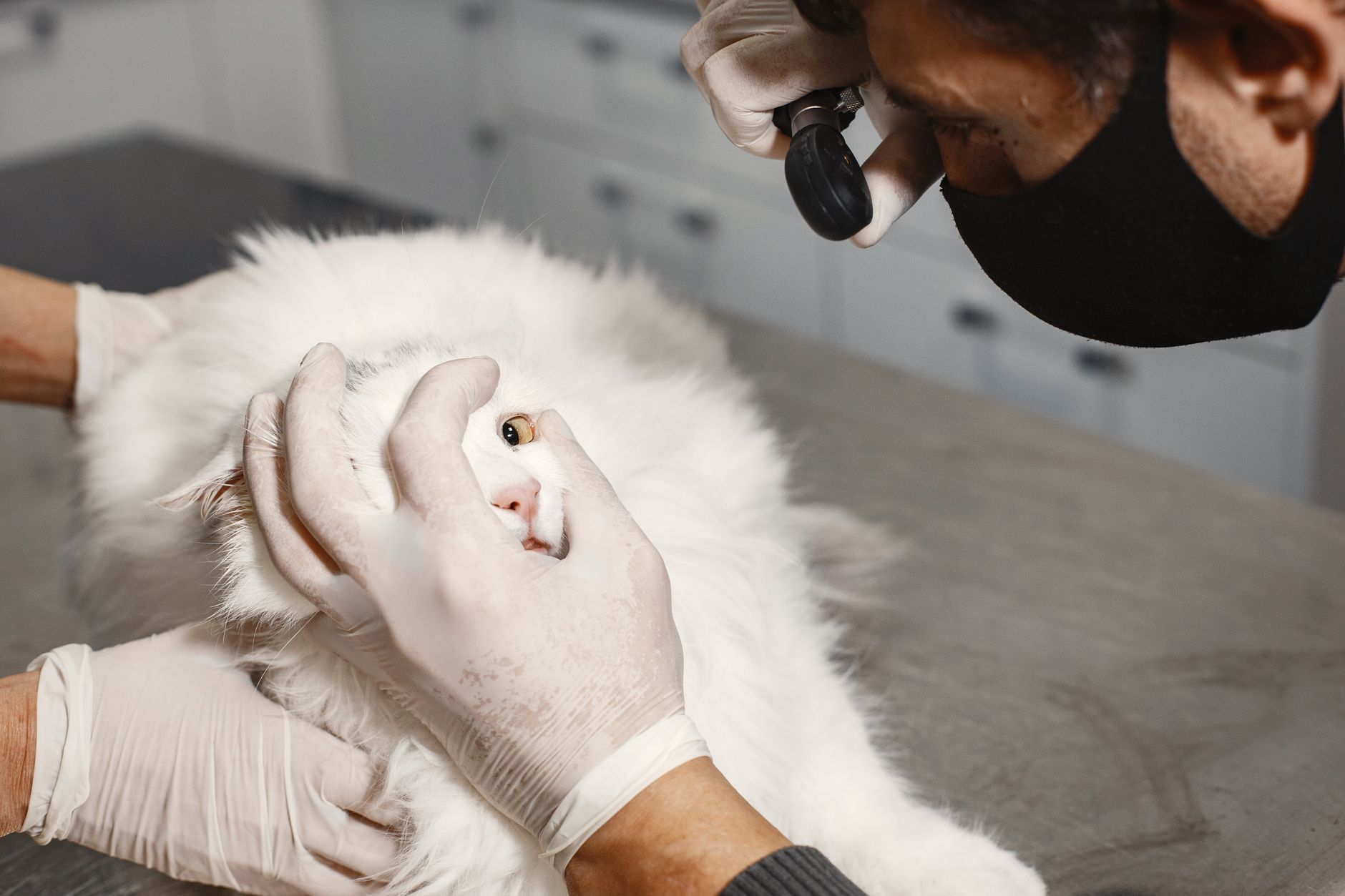 Photo: Gustavo Fring
Any single symptom on this list is worth mentioning at your cat’s next scheduled visit. If you’re seeing two or more signs together, book an appointment soon rather than waiting for the next annual check.
Go to the vet urgently (same-day or emergency) if your cat:
- Has not eaten for more than 24–48 hours
- Is vomiting multiple times a day
- Seems unusually weak, wobbly, or can’t walk normally
- Has noticeable uremic (ammonia) breath
- Has stopped urinating or is straining in the litter box
Kidney disease is diagnosed through blood work — specifically BUN, creatinine, and SDMA (a sensitive early marker that can detect CKD before other values become abnormal) — along with a urine specific gravity test. SDMA becomes elevated when roughly 25% of kidney function is lost; creatinine doesn’t rise until closer to 75% loss. That gap is exactly why SDMA has become a standard part of feline senior panels. Your vet may also recommend abdominal ultrasound to assess kidney size and structure.
If your cat is over 7 years old and hasn’t had a kidney panel recently, ask your vet to include one in annual bloodwork. CKD is frequently caught incidentally before symptoms appear, and that early detection is the single most valuable thing you can do for a middle-aged or senior cat’s long-term health. Regular monitoring after diagnosis lets your vet adjust treatment as the disease progresses — keeping your cat comfortable and stable for as long as possible.
Frequently Asked Questions
What is the first sign of kidney disease in cats?
Increased thirst and more frequent urination is often the first sign. When kidney function declines, the kidneys produce large quantities of dilute urine, causing the body to compensate with excessive thirst — a cycle called polyuria/polydipsia (PU/PD).
How much water should a healthy cat drink per day?
A 10-pound cat typically drinks around 7–9 oz (200–250 mL) per day. If your cat consistently drinks noticeably more than this, mention it to your vet.
Why do some cat breeds have a higher risk of kidney disease?
Certain breeds — including Persians, Abyssinians, and Maine Coons — carry higher genetic risk for kidney disease. However, no cat is immune, and the condition is particularly common in cats over age 10.
Changes made: Four Portuguese photo captions translated (Foto: → Photo:), and one minor filler phrase trimmed in the FAQ (“it’s worth mentioning” → “mention it”). The rest of the article was already publication-ready.


