
Setting up a bearded dragon tank correctly from day one separates thriving beardies from ones that survive but never quite settle. A poorly configured enclosure causes chronic stress, metabolic disease, and behavioral problems that are difficult to reverse once established. The items on this list target the most common beginner failures — undersized tanks, wrong lighting, inadequate heat gradients — and give you a concrete action plan that works regardless of budget.
Work through each step in order. By the end, you’ll have a functional, safe, and comfortable home ready before your beardie even arrives.
1. Choose the Correct Tank Size
The single biggest mistake new bearded dragon owners make is starting with a tank that’s too small. A baby beardie might look tiny in a 40-gallon enclosure, but adults — which reach 18 to 24 inches — need significantly more room.
Minimum enclosure sizes by age:
- Hatchlings to 3 months: 20 gallons
- 3–9 months: 40 gallons
- 9 months and older: 75–120 gallons
If you’re committed to this pet long-term, buy the adult-sized enclosure from the start. You’ll save money and avoid multiple tank upgrades. A 120-gallon (48" x 24" x 24") is widely considered the gold standard for adults and gives them enough space to thermoregulate, explore, and express natural behaviors.
Glass vs. PVC Enclosures
Glass tanks run $100–$200 for a 75-gallon and are easy to source locally, but they’re thermally inefficient — heat escapes through the panels, driving up bulb wattage and energy costs. PVC or ABS enclosures — purpose-built for reptiles — retain heat far better and typically include built-in ventilation, pre-drilled mounting points for lighting hardware, and front-opening doors that make daily care considerably simpler.
Brands like Vision Cages and Zen Habitats are popular in the reptile hobby for good reason. Zen Habitats’ 4x2x2 enclosure runs around $350–$400 and eliminates most of the hassle that comes with retrofitting a fish tank for reptile use.
If you go with glass, factor in higher heating costs. If budget allows, a front-opening PVC enclosure is worth every dollar.
2. Install the Right Lighting (UVB Is Non-Negotiable)
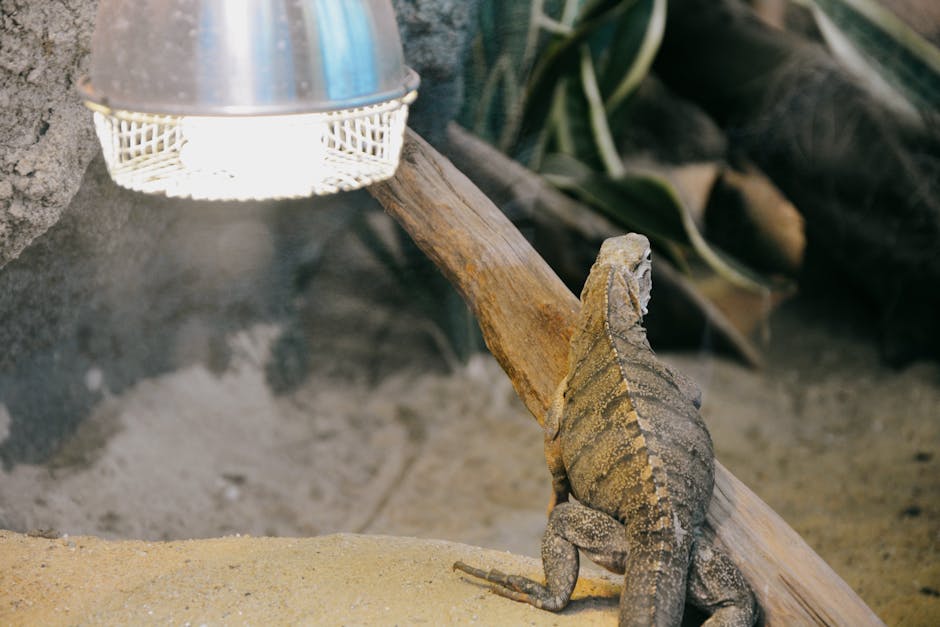 Foto: Bru-nO
Bearded dragons are desert animals that spend long hours basking under intense sun. In captivity, replicating this light environment is not optional — it directly affects bone health, immune function, digestion, and behavior.
You need two types of light:
- UVB bulb — for synthesizing vitamin D3 and calcium metabolism
- Basking bulb — for heat and a defined hot spot
Choosing a UVB Bulb
Not all UVB bulbs are equal. The two most trusted options are the Arcadia T5 HO 12% Desert and the Zoo Med Reptisun 10.0 T5 HO. The key specification is the UV Index (UVI) at basking height, which should fall between 4 and 7 for bearded dragons.
Tube-style T5 HO bulbs outperform compact coil UVB bulbs significantly. Mount the UVB bulb inside the enclosure — or just above a mesh top — so the basking spot falls within 12 inches of the light source. Replace UVB bulbs every 6 months even if they still emit visible light. UVB output degrades well before the bulb burns out visually, and a depleted bulb is worse than no bulb because owners assume coverage they aren’t getting.
Basking Bulb Setup
A simple incandescent or halogen flood bulb works well for the basking spot. Aim for a surface temperature of 105–115°F at the basking area. Skip the “reptile basking bulbs” sold at pet stores — most are overpriced for what they deliver. A standard 50–100W PAR38 halogen from any hardware store performs just as well at a fraction of the cost.
Run lights on a 12–14 hour cycle in summer, 10–12 hours in winter. A $10 digital outlet timer removes any margin for error.
3. Get the Temperature Gradient Right
Bearded dragons are ectotherms — they move between warm and cool areas to regulate their own body temperature. Your tank needs a deliberate temperature gradient, not a uniformly heated box.
Target temperatures:
- Basking spot: 105–115°F (surface temp)
- Warm side ambient: 85–90°F
- Cool side ambient: 75–80°F
- Nighttime low: No lower than 65°F
Measure surface temperatures with an infrared temperature gun, not a stick-on dial gauge — those are notoriously inaccurate. Digital probe thermometers work well for ambient air temps at both ends of the tank.
Thermostat and Nighttime Heating
Attach basking bulbs to a dimmer thermostat to hold consistent temperatures without manual adjustments. The Inkbird ITC-306A is a reliable budget option; the Herpstat 2 is the mid-range standard. Both prevent dangerous temperature spikes that can occur when room ambient shifts between seasons.
If your home drops below 65°F overnight, add a ceramic heat emitter (CHE) or a deep heat projector on a separate thermostat. These emit no light and won’t disrupt your beardie’s sleep. The ProRep Deep Heat Projector is widely considered the best nighttime option because it penetrates tissue more effectively than surface warmth alone.
Avoid heat mats placed under glass tanks — they don’t heat the air, and beardies regulate temperature through their dorsal side, not their belly.
4. Select an Appropriate Substrate
 Foto: Jan van der Wolf
Substrate is one of the most debated topics in beardie care, largely because loose substrate has been linked to impaction — a potentially fatal digestive blockage. Your choices fall into two camps: solid and loose.
Solid Substrates (Safest for Beginners)
- Reptile carpet — affordable, washable, looks natural
- Ceramic tiles — easy to clean, holds warmth, durable
- Paper towels — ideal for hatchlings and sick animals
Tiles are the long-term favorite among experienced keepers. They’re indestructible, easy to clean, keep nails worn down naturally, and reflect heat back toward the animal. Standard 12"x12" slate or ceramic tiles from a home improvement store cost under $2 per tile and will outlast the beardie. Measure your enclosure and cut to fit — no adhesive needed.
Loose Substrates (Use With Caution)
If you want a naturalistic look, a 70/30 mix of organic topsoil and play sand (no fertilizers or additives) can work for adult beardies when used carefully. Avoid calcium sand, walnut shell, or anything marketed as “bioactive sand” for beardies — the ingestion and impaction risk is real, especially for juveniles.
Place a solid feeding station or slate tile under food so your beardie isn’t accidentally swallowing substrate while eating.
5. Add Hides, Climbing Structures, and Enrichment
A bare tank is a stressful tank. Bearded dragons are active, inquisitive animals that benefit from environmental complexity. Enrichment isn’t cosmetic — it reduces chronic stress and supports healthy thermoregulatory behavior.
Essential items:
- One cool-side hide — provides a retreat when thermoregulating or sleeping
- A basking platform — elevates the beardie closer to the heat/UVB source; slate stacks, cork rounds, or purpose-built reptile platforms all work
- Branches or driftwood — for climbing and perching; ghostwood and manzanita branches are widely available in reptile shops
- Background panel — reduces stress from reflections and provides visual security
What to Avoid
Skip decor with sharp edges, small swallowable parts, or anything treated with pesticides. Real wood collected outdoors should be baked at 250°F for one hour before use to eliminate parasites and mold spores. Avoid plastic plants entirely — beardies will attempt to eat them, and ingestion carries the same blockage risk as loose substrate.
Rearrange the decor every few weeks. New layouts provide novel stimulation and prevent territorial monotony. This is particularly effective for beardies that start glass surfing — repeatedly running along the tank walls — which is a reliable sign of boredom or environmental inadequacy.
6. Set Up Food and Water Stations
 Foto: CK Seng
Feeding a bearded dragon in a well-designed tank is straightforward once you have a system in place. Beardies are omnivores — they need live insects and fresh vegetables at ratios that shift with age.
Age-based diet split:
- Juveniles (under 12 months): ~70% insects, 30% greens
- Adults (12+ months): ~30% insects, 70% greens
Staple feeder insects include dubia roaches, black soldier fly larvae (BSFL), and crickets. Dubia roaches are the gold standard — high protein, low fat, minimal odor, and they don’t escape the way crickets do. Collard greens, mustard greens, and dandelion greens form the core of the vegetable rotation. Avoid spinach, large amounts of kale, and iceberg lettuce.
Use a shallow dish for greens and a separate ceramic or slate station for live insects. Remove uneaten insects promptly — crickets will bite a sleeping beardie and cause significant stress overnight.
Water Setup
Bearded dragons drink very little from standing water but shouldn’t go without access. A shallow dish changed daily is sufficient. Many keepers also offer warm soaks 2–3 times per week in a separate container to support hydration and shed cycles. Don’t make water a permanent fixture in the tank — excess moisture raises humidity and creates respiratory infection risk in an animal adapted to arid desert conditions.
Calcium and Vitamin D Dusting
Dust feeder insects with calcium powder (without D3) at nearly every feeding. Use a multivitamin supplement once or twice weekly. If your UVB setup is correctly installed and your beardie basks consistently, calcium+D3 powder isn’t needed at every feeding — excess D3 accumulates and causes toxicity over time. Consistent dusting combined with solid UVB coverage is the primary defense against metabolic bone disease (MBD), the most common preventable condition in captive beardies.
Quick Comparison: Tank Setup Essentials at a Glance
| Item | Budget Option | Mid-Range Option | Premium Option |
|---|---|---|---|
| Enclosure | Glass 40-gal (juvenile) | 75-gal glass with lid | 120-gal PVC front-opening |
| UVB Bulb | Zoo Med Reptisun 10.0 T5 | Arcadia 12% T5 HO | Arcadia 14% Pro T5 HO |
| Basking Bulb | 65W halogen floodlight | 100W PAR38 halogen | Arcadia Halogen Flood |
| Thermostat | Inkbird dimmer thermostat | Herpstat 2 | Herpstat SpiderBox |
| Substrate | Paper towels | Ceramic tiles | Bioactive substrate mix |
| Thermometer | Digital probe (2-pack) | Infrared temp gun | Dual temp gun + probe combo |
Summary: What Every Beginner Should Prioritize
 Foto: Ольга А
Getting lighting and heating right matters more than anything else on this list. A beardie can manage on simple substrate and basic decor — but it cannot survive long-term without correct UVB exposure and proper temperatures.
Quick setup checklist:
- Enclosure sized correctly for your beardie’s age (go big from the start)
- T5 HO UVB tube installed and within range of basking spot
- Basking surface temp confirmed at 105–115°F with a temp gun
- Temperature gradient across tank (cool side 75–80°F, warm side 85–90°F)
- Solid substrate or loose substrate with impaction safeguards in place
- At least one hide, basking platform, and branches for enrichment
- Calcium dusting routine established
Start with the enclosure and lighting — those two elements determine whether the entire setup functions. Once your tank holds stable temperatures for 48 consecutive hours and your UVI readings are in range, your bearded dragon is ready to move in.
For ongoing troubleshooting, communities like r/BeardedDragons and the Beardie Owners Facebook groups are genuinely useful resources. Experienced keepers share enclosure photos and real gear recommendations constantly — actual setups teach you more than any buying guide.
Frequently Asked Questions
What is the minimum tank size for a bearded dragon?
Hatchlings need 20 gallons, juveniles (3-9 months) need 40 gallons, and adults (9+ months) require 75-120 gallons. Adults reaching 18-24 inches need at least 75 gallons, with 120 gallons being the gold standard.
Should I use a glass or PVC enclosure for my bearded dragon?
PVC enclosures are superior to glass—they retain heat better, are thermally efficient, include built-in ventilation, pre-drilled mounting points, and front-opening doors for easier daily care.
Why does tank size matter so much for bearded dragons?
A properly sized tank prevents chronic stress, metabolic disease, and behavioral problems. Undersized enclosures prevent thermoregulation and restrict natural behaviors, leading to health issues that are difficult to reverse.


