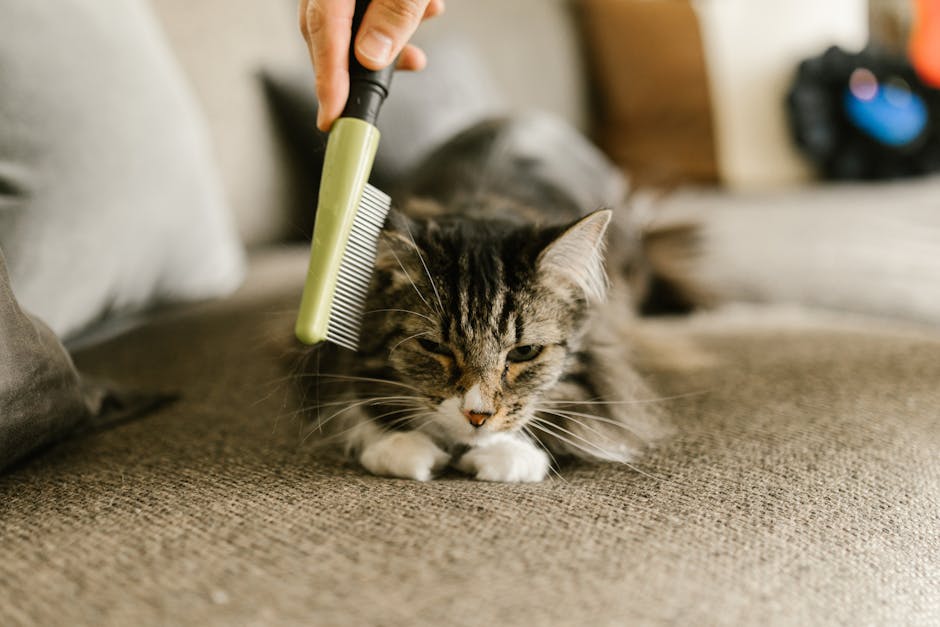
You applied the spot-on treatment on a Tuesday evening, made a mental note, and figured you were covered for the next month. Three weeks later, your cat is scratching relentlessly and you’re finding flea dirt in the corner of the sofa. Again.
This scenario plays out in millions of households every year — not because the products don’t work, but because there’s a persistent and costly gap between what the label promises and what happens under real-world conditions. Understanding that gap is the difference between effective flea control and an exhausting, expensive cycle of reinfestation.
Here’s the stat most manufacturers won’t put on the front of the box: independent efficacy studies consistently show that many topical flea treatments begin losing meaningful protection as early as day 21 — not day 30. For cats specifically, coat type, bathing habits, and skin pH can accelerate that degradation by another 10–15%.
How Topical Flea Treatments Actually Work
Understanding the mechanism explains why treatments fail when they do.
Topical (spot-on) flea treatments are applied to the skin between the shoulder blades, where cats can’t lick them off. The active ingredients are absorbed into the sebaceous glands and distributed through the skin’s oil layer across the body. This is called transdermal distribution, and it takes 24–48 hours to reach full coverage.
The treatment doesn’t sit on your cat’s skin like a barrier coat. It becomes part of the skin’s sebum layer. That’s why water exposure, oily coats, and grooming behavior all affect how long it lasts.
Active Ingredients and Their Profiles
Different actives have very different longevity profiles:
- Fipronil — disrupts the nervous system of insects; remains stable in the lipid layer for 4–5 weeks under controlled conditions, but degrades faster in humid environments
- Imidacloprid — targets nicotinic acetylcholine receptors; highly effective but has a shorter real-world window of approximately 3–4 weeks
- Selamectin — a macrocyclic lactone absorbed systemically; offers more consistent 30-day coverage but requires a prescription in most countries
- Flumethrin (often combined with imidacloprid in collar form) — included here for comparison; not a typical topical active but relevant when evaluating alternatives
The Sebum Distribution Problem
Cats with naturally dry skin or very fine coats distribute the active ingredient less evenly than cats with denser, oilier coats. A 2019 study published in Parasites & Vectors found that distribution efficiency varied by up to 22% between cat breeds — with rex breeds and hairless cats showing significantly altered absorption dynamics.
This means a Maine Coon and a Cornish Rex wearing the same dose of the same treatment are not getting equivalent protection. The label doesn’t tell you that.
For rex breeds and hairless cats like the Sphynx, a veterinarian-prescribed systemic treatment — selamectin or oral fluralaner — will typically outperform any topical spot-on. The sebum pathway that spot-ons rely on is simply less developed in these breeds. If your hairless cat cycles through monthly topical treatments without lasting relief, the product isn’t failing; the delivery mechanism is.
What the Duration Data Actually Shows

The honest answer to how long does topical flea treatment last cats is: it depends on the product, the active ingredient, and a half-dozen environmental variables. But we can be more specific than that.
Here’s a synthesis of efficacy data drawn from manufacturer trials and independent veterinary research:
| Product | Active Ingredient | Label Claim | Efficacy at Day 21 | Efficacy at Day 28 | Real-World Window |
|---|---|---|---|---|---|
| Frontline Plus | Fipronil + S-methoprene | 30 days | ~95% | ~88% | 25–30 days |
| Advantage II | Imidacloprid + pyriproxyfen | 30 days | ~90% | ~78% | 21–28 days |
| Revolution (Stronghold) | Selamectin | 30 days | ~97% | ~94% | 28–35 days |
| Bravecto Spot-On | Fluralaner | 12 weeks | ~98% | ~96% | 10–12 weeks |
| Broadline | Fipronil + eprinomectin + praziquantel + S-methoprene | 30 days | ~93% | ~85% | 25–30 days |
One caveat worth noting: manufacturer efficacy trials run under controlled laboratory conditions — standardized flea challenges, fixed temperature and humidity, zero bathing. Real-world performance skews lower. The “Real-World Window” column reflects that adjustment, drawing on field study data and veterinary practice reporting rather than lab numbers alone.
Selamectin-based products (Revolution/Stronghold) and fluralaner-based products (Bravecto Spot-On) consistently outperform imidacloprid-only products in maintaining efficacy through week four. Bravecto’s 12-week window is backed by randomized controlled trial data with less than 5% efficacy loss at day 84 in controlled conditions.
The imidacloprid products aren’t inferior — they’re simply shorter-acting, and the standard 30-day reapplication schedule often leaves a 2–9 day gap in protection.
Factors That Shorten Your Cat’s Protection Window
Knowing what degrades treatment efficacy is as important as knowing the product’s baseline duration. These are the variables with the most impact:
Bathing and Water Exposure
Most topical treatments specify “allow 48 hours before bathing.” What they don’t emphasize is cumulative water exposure. A 2020 review in the Journal of Veterinary Parasitology found that cats bathed more than twice per month showed a 30–40% reduction in topical treatment efficacy at the three-week mark compared to unbathed controls.
Outdoor cats in rainy climates — particularly relevant in the UK — face similar exposure without a single bath event. Rainfall doesn’t strip the treatment entirely, but repeated exposure disrupts the sebum layer that carries the active ingredient.
Environmental Flea Load
Topical treatments protect the cat — they do not treat the home. Flea eggs, larvae, and pupae in carpets, furniture, and bedding can survive for up to 12 months. Even a fully-protected cat re-entering a heavily infested environment will appear to have “failed” treatment when the issue is actually ongoing environmental reinfestation.
In high-load environments, adult fleas jumping onto a treated cat will die — but the lag between infestation and death (typically 12–24 hours for fipronil; 3–5 hours for imidacloprid) means you may still observe live fleas on your cat even when the product is working correctly.
Environmental management is non-negotiable in any active infestation. Vacuuming daily — not weekly — removes an estimated 30–60% of flea eggs before they hatch. Follow with a household spray containing an IGR (insect growth regulator) such as methoprene or pyriproxyfen, which prevents larvae from reaching the adult biting stage. Without this two-part approach, even the most effective topical cat treatment is fighting a replenishing population.
Coat Condition and Skin Health
Cats with seborrhea, hormonal imbalances, or compromised skin barriers distribute topical treatments less efficiently. Senior cats, in particular, often have reduced sebaceous gland activity, which can shorten the effective window by 5–7 days compared to adult cats in peak health.
Overwashing with dish soap or harsh shampoos — a commonly recommended home remedy — strips the sebum layer entirely and can reduce treatment efficacy to near-zero within 48 hours of application. Never use dish soap on a treated cat.
Cats on long-term corticosteroids or with diagnosed skin conditions should have their flea treatment protocol reviewed by a vet. The interaction between skin barrier dysfunction and topical product absorption is significant and frequently underestimated in general advice.
Comparing Treatment Formats: Is Topical Always the Best Choice?

Topical spot-ons are the most widely used format globally, but they’re not universally the most effective. Context determines the right call.
| Format | Duration | Application | Best For | Limitations |
|---|---|---|---|---|
| Spot-on (topical) | 3–12 weeks | Monthly (or 12-week) | Most cats; indoor/outdoor | Affected by water, grooming |
| Flea collar | 8 months | Set and forget | Cats with regular water exposure | Fit compliance; contact irritation risk |
| Oral tablet | 1–3 months | Monthly/quarterly | Cats resistant to topicals | Requires prescription (some countries) |
| Spray | 1–2 weeks | Weekly | Targeted environmental use | Short duration; stress on cat |
For cats in the UK or Australia that spend significant time outdoors in variable weather, collars with integrated actives (Seresto) or quarterly oral treatments may outperform monthly spot-ons over the course of a year. In the US market, selamectin (Revolution) remains the gold standard for most indoor-outdoor cats due to its systemic action and consistent 30-day window.
In Australian conditions — where flea pressure is year-round and humidity is high across much of the east coast — Bravecto Spot-On’s 12-week window offers a meaningful compliance advantage. A missed treatment in December in Brisbane carries very different consequences than a missed month in November in Manchester.
❌ Common Mistakes to Avoid
Even the best flea treatment will fail if applied or managed incorrectly. These are the errors that account for the majority of reported treatment failures:
Applying between the ears instead of the shoulder blades. The skin behind the ears is thin and allows faster evaporation; the interscapular space (between shoulder blades) is the optimal site for sebum absorption and prevents ingestion during self-grooming.
Assuming the product treats the environment. Spot-ons protect the cat. They do not kill eggs or larvae in carpets, bedding, or furniture. Failing to vacuum aggressively and treat soft surfaces with an appropriate household spray allows re-infestation to continue regardless of how well the cat is protected.
Bathing the cat within 48 hours of application — or immediately before. Wet skin does not absorb the treatment effectively. Both pre- and post-application bathing are significant efficacy killers.
Using dog flea treatments on cats. Permethrin — found in many canine topicals — is acutely toxic to cats and can be fatal. This is not a theoretical risk. In the UK alone, hundreds of cats are treated for permethrin toxicosis annually after accidental exposure.
Skipping months because the cat “seems fine.” Fleas spend approximately 95% of their life cycle off the host, in the environment. A cat with no visible fleas in winter can still be harboring an active household infestation. Year-round, consistent treatment is the clinical standard.
Final Verdict
 Foto: 27707
Topical flea treatments for cats are highly effective — when matched to the right product, applied correctly, and supported by environmental management. The 30-day label claim holds up well for selamectin and fluralaner-based products under most conditions; imidacloprid-based treatments should realistically be considered 21–25 day products for cats with any water exposure or grooming intensity.
For cats in high-humidity climates, multi-pet households, or with regular outdoor access, quarterly fluralaner (Bravecto Spot-On) represents the strongest evidence-based choice for sustained efficacy. For prescription-averse households, Frontline Plus or Revolution remain reliable provided the reapplication schedule is strict.
If you’ve switched products twice and are still seeing fleas within three weeks of application, the problem is almost certainly environmental rather than product failure. A professional pest control assessment of the home — before changing treatment again — will save money and spare your cat unnecessary discomfort.
Quick Reference Summary
| Variable | Impact on Duration |
|---|---|
| Active ingredient | High — selamectin and fluralaner outperform imidacloprid at 4 weeks |
| Water exposure (2+ baths/month) | Reduces efficacy by 30–40% at day 21 |
| Environmental flea load | Does not affect product duration but masks treatment success |
| Cat coat type/skin condition | Up to 22% variation in distribution efficiency |
| Incorrect application site | Significantly reduces absorption and distribution |
| Label claim vs. real-world window | Gap of 5–9 days for imidacloprid products under standard conditions |
Ready to choose the right treatment for your cat? Look for products with selamectin or fluralaner as the active ingredient if your cat has any water exposure, grooms frequently, or lives in a high-humidity environment. Cross-reference with your vet for prescription options, and don’t skip the environmental treatment step — your cat’s protection is only as strong as the flea population management happening around her.
Frequently Asked Questions
Why do topical flea treatments fail before the 30-day mark?
Independent efficacy studies show most topical flea treatments lose meaningful protection as early as day 21, not day 30. For cats, coat type, bathing habits, and skin pH can accelerate this degradation by another 10–15%.
How does topical flea treatment distribute across a cat’s body?
The active ingredients are absorbed into the sebaceous glands between the shoulder blades, then distributed through the skin’s oil layer via transdermal distribution—a process that takes 24–48 hours to reach full coverage.
What factors reduce how long topical flea treatments protect cats?
Water exposure, oily coats, grooming behavior, humidity, and skin pH all accelerate treatment degradation. Different active ingredients like fipronil and imidacloprid also have different real-world longevity profiles.


