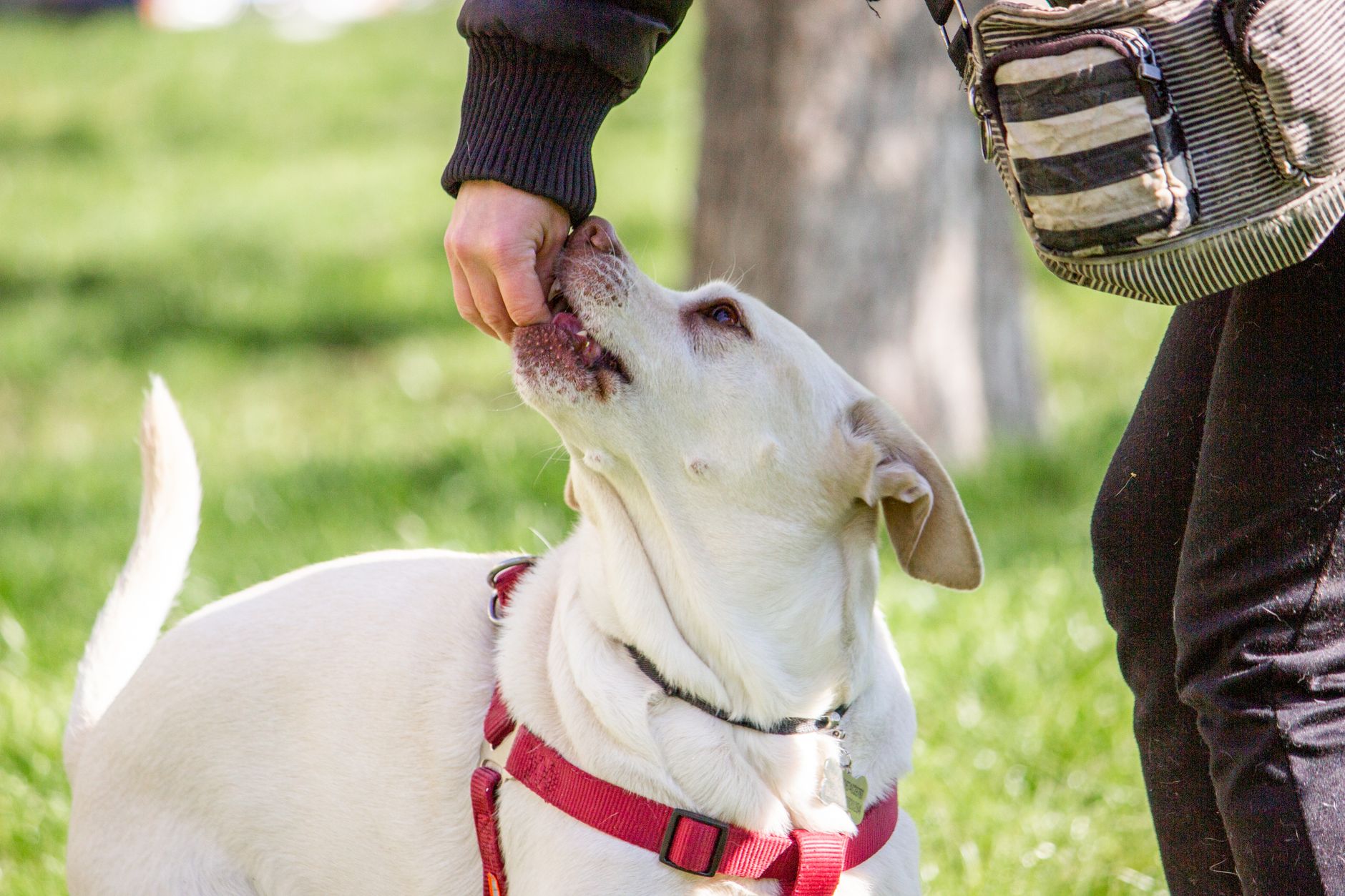
Seventy-three percent of dog owners who quit training before hitting their goals cite “inconvenience” as the reason — not lack of motivation, not a difficult dog. Inconvenience. The fumbling for treats buried in a jacket pocket. The torn plastic bag that spills kibble across the park. The 1.5-second delay between correct behavior and reward that erases the learning signal entirely.
A well-configured treat pouch eliminates every one of those failure points. Yet most owners either ignore this tool entirely or set it up wrong, turning a precision instrument into a glorified fanny pack.
This guide breaks down exactly how to select, configure, and use a treat pouch to maximize training outcomes — backed by behavioral science and the practical realities of daily dog ownership.
Why Timing Is the Entire Game
Operant conditioning — the mechanism behind reward-based training — depends on reward delivery within 1.2 seconds of the target behavior. Research from behavioral scientist Karen Overall’s clinical work consistently places the optimal reinforcement window at under one second for complex behavior chains.
Every extra second degrades the signal. A dog who sits and waits two seconds for a treat from a zipped pocket is learning that something vague and unclear earns food. A dog who receives a treat in 0.4 seconds is learning that the specific muscle movement of sitting earns food.
This is why the setup of your treat pouch is not a comfort issue. It is a training precision issue.
The Mechanics of the Reinforcement Window
When a dog performs a correct behavior, dopamine release in the mesolimbic pathway begins within milliseconds. The association between action and reward is most strongly encoded during this window. Delay it, and the dog begins to associate the reward with whatever they were doing at the moment of delivery — which might be sniffing the ground, glancing away, or taking a step.
Professional trainers in competitive obedience routinely practice treat delivery speed as a standalone skill. The fastest handlers deliver food from hand to dog’s mouth in under 0.3 seconds. They practice the motion with an empty pouch before sessions — the same way a surgeon rehearses instrument handling before a procedure. For a first-time pet owner, 0.8–1.0 seconds is a realistic and effective target — but only achievable with the right pouch, in the right position, with the right treats inside.
The handler’s body mechanics matter too. A treat retrieved with elbow tucked, wrist rotating outward from the pouch, and arm extending forward in a consistent arc keeps delivery smooth and predictable. Lunging forward or reaching awkwardly telegraphs confusion to the dog before the treat even arrives.
Anatomy of an Effective Treat Pouch Setup
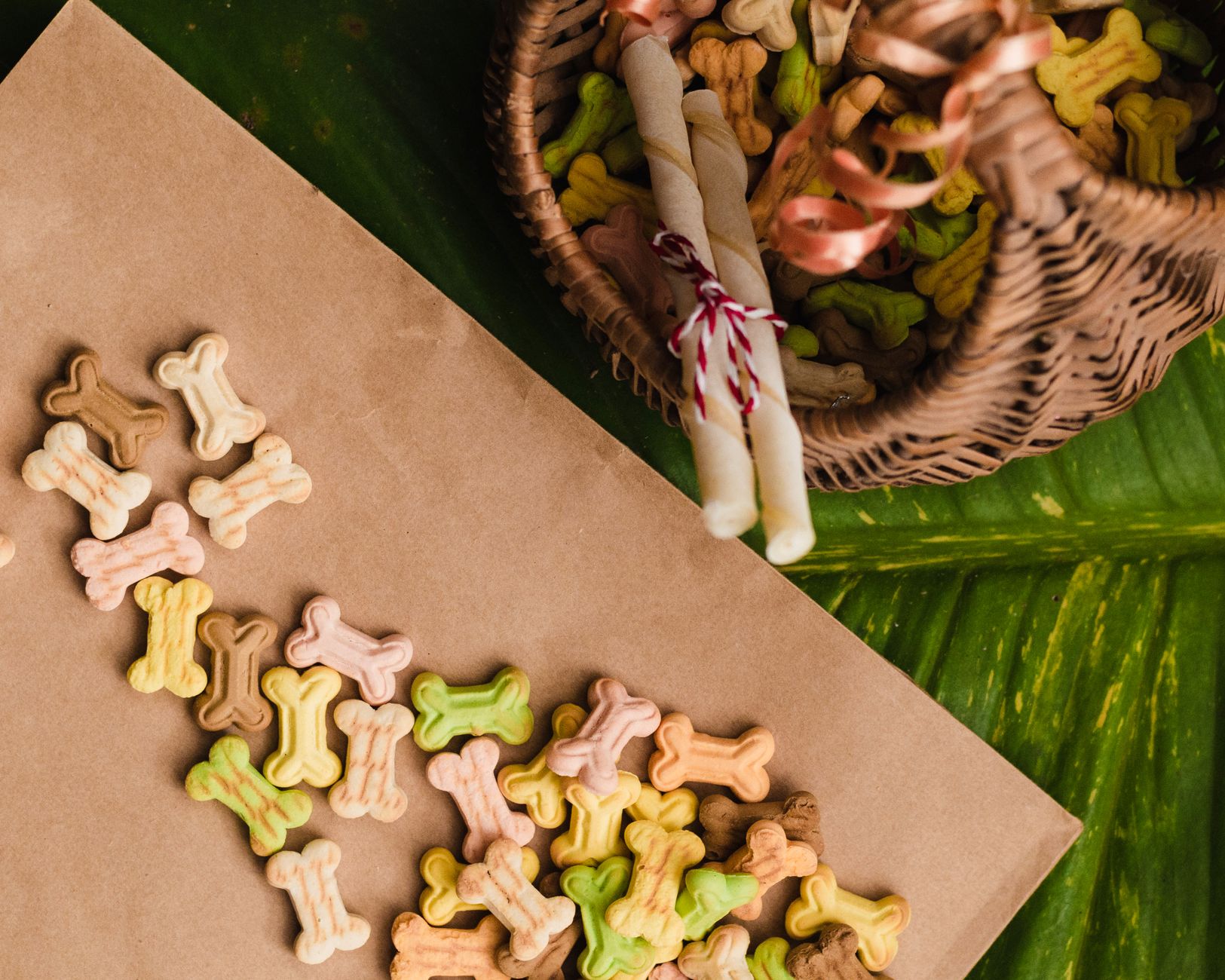 Foto: Rubenstein Rebello
Not all pouches are built equally, and even a well-designed pouch fails when configured poorly. There are five variables that determine whether a pouch supports or undermines training.
1. Closure mechanism
Magnetic closures outperform drawstring and zipper systems for training speed. A magnetic lid can be opened and resealed in a single hand motion in under 0.2 seconds. Drawstrings average 0.8–1.2 seconds. Zippers are the slowest and should be reserved for treat storage between sessions, not active use.
2. Pouch positioning
The optimal belt position is at the 3 o’clock or 9 o’clock position (hip, same side as dominant hand), not behind the hip. Positioning the pouch at the small of the back adds 0.4–0.6 seconds to retrieval time and requires a cross-body reach that shifts your body weight and changes your stance — which dogs read as a behavior cue.
3. Treat type and preparation
Soft, high-value treats in small pieces (chickpea-sized or smaller) allow for rapid delivery without disrupting the training rhythm. Hard treats require the dog to pause, chew, and disengage. The ideal training treat dissolves within 2–3 seconds of contact.
4. Pouch volume and treat quantity
Overfilling a pouch slows retrieval and causes treats to clump. A pouch should be filled to 60–70% capacity, allowing single treats to be grabbed individually without searching. For 30-minute sessions, 40–60 pea-sized treats is a reliable benchmark.
5. Hygiene and odor management
Treat pouches that aren’t cleaned weekly develop bacterial buildup from moisture and residue. This creates off-odors that can subtly communicate stress or food-source anxiety to some dogs. Machine-washable pouches with a removable interior liner are the practical standard for daily trainers.
Comparison: Top Treat Pouch Configurations
The market offers multiple pouch styles. Here is an objective breakdown across the metrics that matter for active training:
| Pouch Style | Closure Type | Retrieval Speed | Hands-Free? | Best For | Price Range |
|---|---|---|---|---|---|
| Magnetic belt pouch | Magnetic flip | ★★★★★ (0.2s) | Yes (belt clip) | Daily obedience, reactive dog work | $15–$35 |
| Drawstring belt pouch | Drawstring | ★★★☆☆ (0.9s) | Yes (belt) | Casual training, puppies | $10–$25 |
| Bait bag (pocket style) | Velcro | ★★★★☆ (0.4s) | No (held) | Competition, precision work | $20–$45 |
| Running belt with pouch | Zipper | ★★☆☆☆ (1.4s) | Yes (waist) | Hiking, distance recall practice | $25–$55 |
| Silicone wristband | Open top | ★★★★★ (0.1s) | No (wrist) | Puppy socialization, short sessions | $8–$18 |
| Vest with treat pocket | Open pocket | ★★★★☆ (0.3s) | Yes (vest) | Service dog training, working dogs | $40–$90 |
For most pet owners training a single dog in a home or park environment, the magnetic belt pouch at the 3-o’clock position is the clear performance winner. The silicone wristband wins on raw speed but carries limited treat volume and no secondary storage for clickers, bags, or keys.
What Goes Inside: Treat Selection Principles
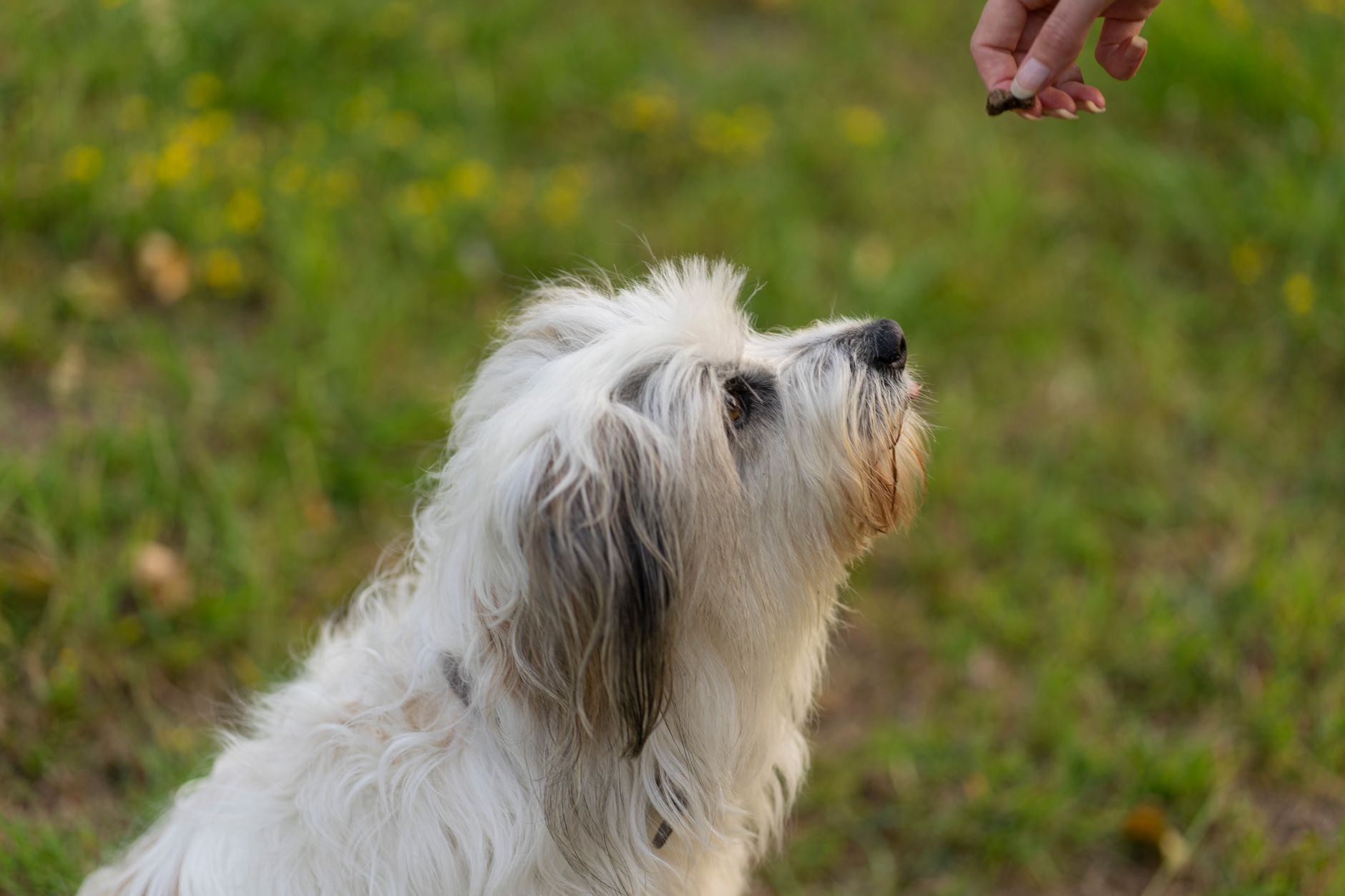 Foto: Denis Liendo ✅
A correctly configured pouch means nothing if it’s loaded with the wrong treats. Behavioral reinforcement operates on value — the dog’s subjective assessment of the reward, not yours.
High-Value vs. Low-Value Treats
High-value treats are used for teaching new behaviors, proofing in distraction environments, and working with reactive or fearful dogs. Low-value treats are appropriate for maintaining already-learned behaviors in low-distraction settings.
A common mistake: using high-value treats for every repetition in every session. This inflates the dog’s baseline expectation and eliminates the motivational differential needed to increase effort on harder tasks. The strategic use of treat value — low for easy asks, high for difficult or novel behaviors — is one of the most underused tools in amateur training.
Effective high-value options for most dogs:
- Cooked chicken breast (no salt, diced small)
- Freeze-dried liver treats
- String cheese (torn into small pieces)
- Commercial training treats with >30% protein content (e.g., Zuke’s Mini Naturals, Charlee Bear)
For dogs with dietary restrictions, dehydrated sweet potato or air-dried salmon offers palatability without common allergens.
Run a simple palatability test before committing to a treat for training: offer the candidate treat alongside a known favorite. If the dog consistently chooses the known favorite, the candidate belongs in the low-value category. Treat hierarchy is dog-specific — what works for a Labrador may not move a Shiba Inu at all.
The Multi-Treat Partitioning Strategy
Advanced trainers often partition the treat pouch into two sections — low value in the main compartment, high value in a secondary zippered pocket. This allows real-time treat-value escalation without disrupting the training flow.
When a dog offers an unexpected and particularly clean performance of a behavior (spontaneous heeling, an unusually fast recall), reaching for the high-value pocket creates a jackpot moment that strongly encodes the behavior. The unpredictability of jackpot delivery increases behavior reliability under variable reinforcement schedules — documented in both classical operant conditioning research and modern applied behavior analysis. It’s the same principle that makes variable-ratio reinforcement schedules more durable than fixed ones: unpredictability sustains engagement.
Session Structure and Treat Pouch Discipline
The pouch is not just equipment. It is a behavioral cue. Dogs learn the pouch means “training mode,” which means engagement, attention, and energy expenditure are all coming. This conditioned emotional response is an asset when used deliberately and a liability when allowed to drift.
The pre-session routine should be consistent: snap the pouch on, load treats, take a breath. Some trainers do a short warm-up behavior (hand touch or sit) before beginning the main session objective. This creates a clear psychological shift for both dog and handler.
Mid-session pouch management:
- Never fish around in the pouch while the dog is performing a behavior — retrieve before or after, not during
- Keep the pouch closed when doing passive observation or breaks
- Avoid petting the dog with the hand that holds treats — it blurs the treat delivery signal
- If using a clicker, the clicker hand and treat hand should be separate and consistent across sessions
The post-session routine matters for maintaining the pouch’s cue value. Remove the pouch visibly after the final repetition, create a clear end marker (“yes, done, free”), then store the pouch out of sight. Dogs who see the pouch removed know the session is over. Dogs who never see it removed remain in aroused anticipation, which degrades their ability to settle.
Troubleshooting Common Pouch Setup Failures
 Foto: Haberdoedas Photography
Even experienced owners run into predictable problems. Here are the most common pouch-related training failures and their fixes.
Problem: Dog mugging the pouch. This is a management failure, not a behavior problem. If a dog repeatedly jumps at or noses the pouch, reinforcement has been accidentally delivered for that behavior at some point — or the treats inside are too high-value relative to the dog’s impulse control development. Solution: teach “leave it” as a prerequisite, and load the pouch with lower-value treats until impulse control is reliable.
Problem: Dog ignoring treats during training. Three possible causes: treats are too low-value for the distraction level of the environment, the dog is not hungry enough (training on a full stomach reduces treat motivation by an estimated 40–60%), or the dog has been overexposed to the same treat type and novelty has worn off. Solution: rotate treat types weekly, train 30–60 minutes before meals, and reassess treat value relative to distraction level.
Problem: Slow retrieval ruining timing. Usually caused by overfilling, wrong pouch position, or poor treat size. Solution: reduce fill level to 60%, reposition to the dominant-hand hip, and cut treats smaller. If still slow, replace with a magnetic-closure model.
Problem: Treat mess and odor. Soft treats left in a pouch for multiple days generate mold and bacterial residue. Solution: empty and rinse the pouch after every session. Fully wash weekly. Let dry completely before reloading.
Problem: Dog disconnecting when the pouch is absent. Some dogs learn to perform only when the pouch is visible — a strong sign that the pouch became the discriminative stimulus for reinforcement rather than the handler’s cues. Solution: phase the pouch out gradually using variable schedules of reinforcement, occasionally rewarding from a pocket or a jar on the counter. The dog should work for the behavior cue, not the equipment.
Final Verdict: Treat Pouch Setup as a Training Multiplier
A treat pouch that is correctly selected, positioned, loaded, and managed functions as a training force multiplier. It compresses the reinforcement window, eliminates handler fumbling, and creates a consistent conditioned cue that signals engagement to the dog.
The difference between a magnetic belt pouch at the 3-o’clock position with correctly portioned, high-value treats versus an overfilled drawstring pouch at the small of the back is not aesthetic. Across a 6-week basic obedience program, the timing differential alone — 0.2 seconds vs. 1.2 seconds — amounts to hundreds of degraded learning signals. That’s the measurable cost of poor setup.
The setup takes 10 minutes to get right. The return is a sharper, faster-learning dog and a less frustrated handler.
If you’re starting fresh, invest in a quality magnetic belt pouch, load it correctly, and practice treat delivery speed as a standalone drill before your next training session. Your dog’s progress rate will tell you whether it mattered.
Frequently Asked Questions
Why is timing important in dog training with treats?
Dogs must receive treats within 1.2 seconds of correct behavior for optimal learning. Delays cause dogs to associate rewards with unrelated actions instead of the intended behavior.
What is the optimal reinforcement window for dog training?
The optimal reinforcement window is under one second for complex behavior chains, based on behavioral scientist Karen Overall’s research. A 0.4-second treat delivery teaches precision far better than a two-second delay.
How does a treat pouch eliminate common training failures?
A well-configured treat pouch solves fumbling delays, eliminates spillage from torn bags, and ensures treats are instantly accessible—removing the biggest barrier owners cite for quitting training: inconvenience.


