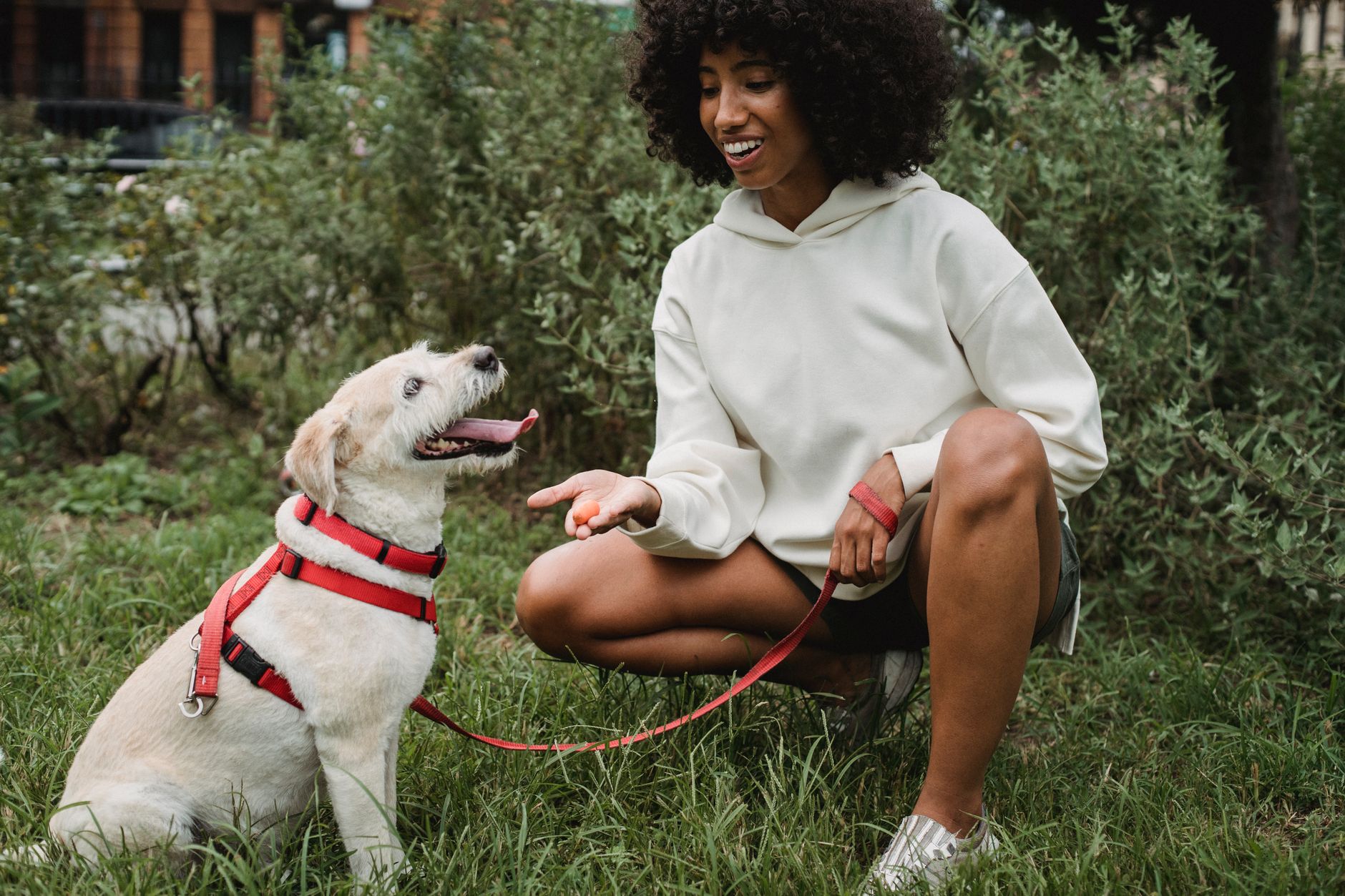
Scanning for Portuguese captions, AI filler phrases, and fluency issues throughout.
What’s the Best Clicker for Dog Training?
The Karen Pryor i-Click is the most consistently recommended clicker for dog training — it’s quiet enough not to startle noise-sensitive dogs, fits comfortably in your palm, and has held up for trainers who use it daily for years. But whether it’s the right clicker for your dog depends on a few things worth understanding before you spend money.
Clicker training works because the sound marks the exact moment your dog does something right. Timing is everything. So the best device is one you can operate quickly, consistently, and without fumbling.
What Makes a Clicker Training Device Actually Good?
 Photo: Mykhailo Petrenko
Not all clickers are equal, and the difference matters more than you’d think.
A cheap box clicker from a dollar store and a precision training tool might look similar, but they behave very differently in practice. Here’s what separates a solid clicker from a frustrating one:
Sound consistency. Every click should sound identical. If the tone varies depending on how hard you press, your dog gets inconsistent information. That slows learning significantly.
Ease of use under pressure. During a training session, you’re watching your dog, holding treats, maybe managing a leash. The clicker needs to fire instantly when you squeeze it — no stiffness, no fumbling for the button.
Timing accuracy. Dogs learn best when the marker lands within half a second of the behavior. That’s a tight window. A clicker that requires a firm press or has a stiff mechanism introduces latency that erodes precision — especially when you’re working on fast behaviors like sit-to-stand transitions or catching a fleeting eye contact moment.
Volume. This is often overlooked. A clicker that’s too loud can spook a noise-sensitive dog and create an unpleasant association with training. A clicker that’s too quiet won’t register clearly in an outdoor or distracting environment.
Ergonomics. Button clickers and box clickers both work, but they suit different people. Box clickers (the classic rectangular ones) are louder and sit in your palm. Button clickers attach to your finger or wrist and leave your hands free.
Box Clickers vs. Button Clickers: Which Should You Choose?
Box clickers produce a louder, sharper “click-click” sound. They’re the traditional format and work well for most dogs in normal training environments. Many experienced trainers prefer them because the sound carries clearly — helpful when working at distance or outdoors with ambient noise.
Button clickers use a smaller metal tongue inside a plastic casing. They’re quieter and more precise. The i-Click is a button clicker. If your dog is sensitive to sound, or you’re training in close quarters like a small apartment, a button clicker is usually the smarter starting point.
Hand size matters here too. Trainers with smaller hands often find button clickers easier to control with a single finger, while people with larger hands get better mechanical feedback from a full-palm box clicker. If you can, test both formats before committing — most pet stores let you try them in-aisle.
Wrist-strap and ring clickers are newer variations. They free up both hands, which can be useful during agility work, heeling practice, or off-leash training where you need both arms free to signal.
Which Clicker Training Devices Are Actually Worth Buying?
Here’s a breakdown of the most popular and well-reviewed options across different needs and budgets.
Best Clickers for Most Dogs
Karen Pryor i-Click — The gold standard for a reason. Quiet, responsive, and fits most hand sizes. The recessed button makes accidental clicks unlikely. Available widely in the US, UK, and Australia. Around $3–6 each.
PetSafe Clik-R — Comes with a finger strap so it stays in place during active training sessions. Slightly louder than the i-Click. Good for outdoor training or dogs who don’t respond to softer sounds. Around $4–8.
Starmark Pro-Training Clicker — Comes with an ergonomic handle and an adjustable volume dial, which is genuinely useful. The louder setting works for outdoor or distance training; the quieter setting is better for sensitive dogs. One of the few clickers that actually solves the volume problem. Around $6–10.
Best Clickers for Noise-Sensitive Dogs
If your dog flinches at the sound of a standard clicker, don’t abandon clicker training — just switch tools.
Karen Pryor i-Click (mentioned above) — Already quieter than box clickers, this is the first recommendation for sensitive dogs.
Soft clickers / muffled clickers — Some trainers tape a small piece of foam over a box clicker to dampen the sound. It’s not elegant, but it works. If you’re in Australia, look for this as a DIY approach since muffled specialty clickers are harder to source there.
Tongue clicks — No device at all. Some trainers use a mouth click (the sound you make by pressing your tongue to the roof of your mouth and releasing). It’s consistent, always available, and completely silent to everyone except the dog. A practical fallback if devices feel like a hassle.
Clicker Device Comparison Table
 Photo: Aliaksei Semirski
| Device | Type | Volume | Best For | Price (USD) |
|---|---|---|---|---|
| Karen Pryor i-Click | Button (finger) | Quiet | Sensitive dogs, indoor training | $3–6 |
| PetSafe Clik-R | Button (finger strap) | Medium | Active training, outdoor sessions | $4–8 |
| Starmark Pro-Training | Handle with button | Adjustable | Versatile use, all environments | $6–10 |
| Classic Box Clicker | Box (palm) | Loud | Budget option, outdoor/distance | $1–3 |
| Acme Dog Training Clicker | Box (palm) | Medium-loud | UK market, widely available | £2–5 |
Do You Actually Need a Clicker, or Will a Verbal Marker Work Just As Well?
Clickers have a genuine edge over verbal markers — but it’s not a massive one, and verbal markers absolutely work.
The advantage of a clicker is acoustic precision. The sound is the same every time, at the exact moment you press it. Your voice, on the other hand, varies in tone, timing, and emotion. When you’re excited that your dog sat, you might say “YES!” a half-second late and with different emphasis than usual. That inconsistency can blur the signal.
For a dog you’re just starting to train, the clicker’s consistency can speed up the early stages of learning. Once a dog really understands the game, the difference matters less.
When a Verbal Marker Makes More Sense
- When both hands are occupied and you can’t hold a clicker
- When you’re in water or a very cold environment where gripping small devices is impractical
- When you’ve built such a strong training relationship that your dog reads your cues naturally
- For cats — many cat owners find verbal markers easier than clickers
What About Clicker Apps on Your Phone?
There are free clicker apps that mimic the sound. They work in a pinch, but they introduce a real problem: you have to unlock your phone, open the app, and tap the screen — all of which adds latency. By the time you tap, the moment has passed. For any serious training, a dedicated device wins every time.
My Dog Is Scared of the Clicker Sound — What Do I Do?
 Photo: Teodora Popa photographer.
This happens more often than people expect, especially with rescue dogs or dogs with noise sensitivity. The solution isn’t to abandon clicker training, but to introduce the sound gradually.
Start by “charging” the clicker at a distance. Click from across the room, then immediately toss a treat toward your dog. You’re teaching them that the sound predicts something good, not something startling. Do this for several short sessions — two or three minutes each — before using the clicker at close range.
A practical progression: start 15 feet away, then 10 feet, then 5, then arm’s length. Move closer only when your dog is relaxed and orienting toward you after the click rather than away from it.
If even a distant click causes your dog to shut down or leave the room:
- Switch to a quieter clicker (i-Click is a good starting point)
- Try a pen click (retractable ballpoint pens make a similar sound and can desensitize a dog more gradually)
- Use a verbal marker (“yes” or a short tongue click) instead
- Muffle a standard clicker with tape or cloth to reduce the volume
A frightened dog isn’t learning effectively, no matter how good your timing is.
Where to Buy Clicker Training Devices in the US, UK, and Australia
United States: Amazon is the easiest option for all major brands. PetSmart and Petco both carry Karen Pryor clickers and PetSafe Clik-R in-store. Chewy often has competitive pricing and reliable shipping, making it a solid alternative to Amazon for US orders.
United Kingdom: Pets at Home stocks several options including the PetSafe Clik-R. Acme (a UK-based whistle and clicker manufacturer) makes reliable box clickers widely available in British pet shops and online. Amazon UK carries Karen Pryor products.
Australia: Petbarn and PetStock carry basic clickers in most locations. For more specialized tools like the Starmark Pro-Training Clicker, you’ll likely need to order online through Amazon Australia or specialist training supply sites. Shipping from US-based sellers can take 2–3 weeks, so ordering a backup makes sense.
A Note on Buying in Bulk
If you train consistently, buying 3–5 clickers at once is worth it. They’re cheap, easy to lose, and having one in your training bag, one by the front door, and one in your car means you’re never without it when an opportunity comes up.
What Else Do You Need to Get Started With Clicker Training?
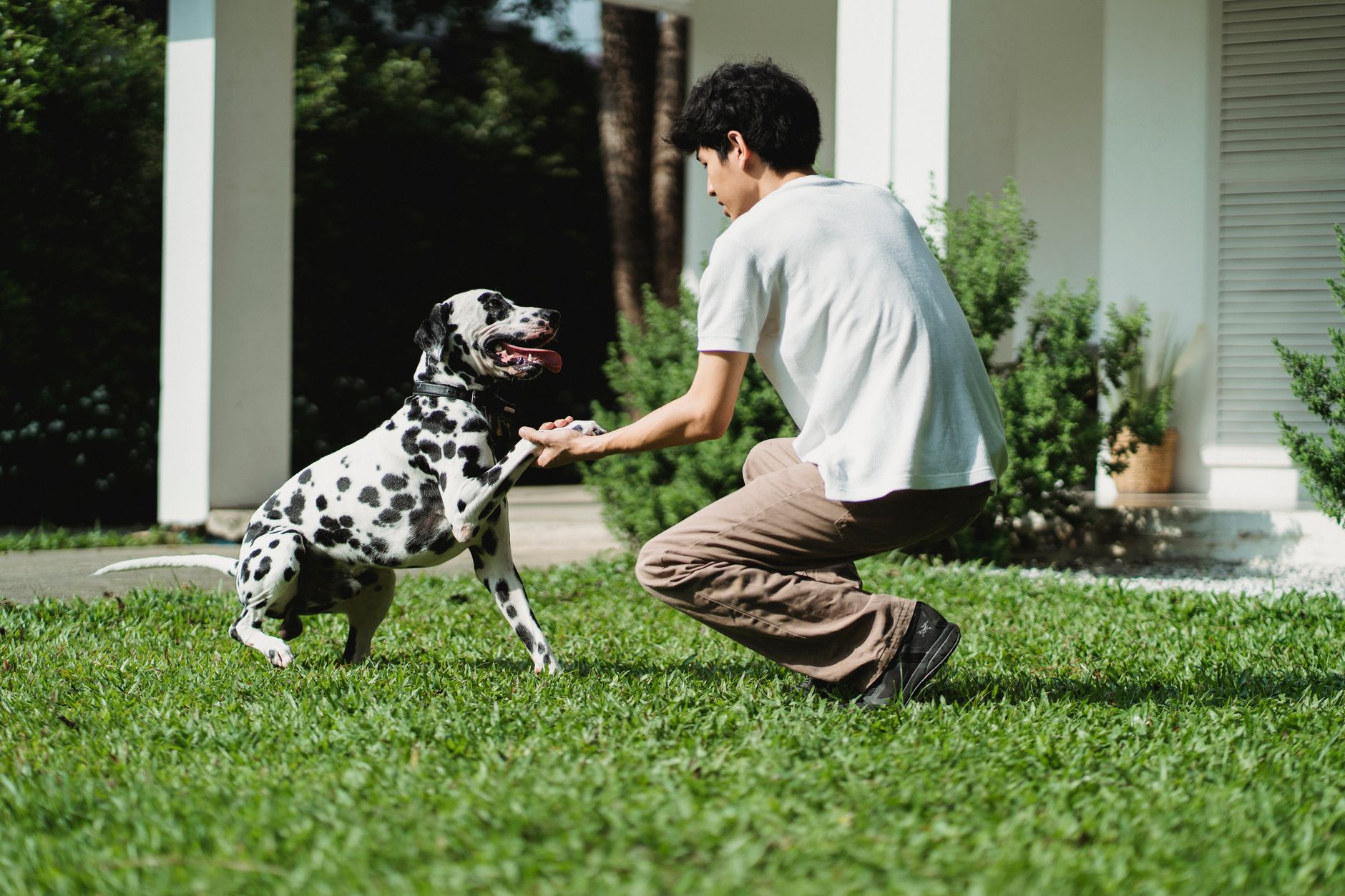 Photo: Bethany Ferr
A clicker is one piece of a simple setup. The rest is equally straightforward:
High-value treats — small, soft, and easy to chew quickly. Cheese cubes, cooked chicken, or commercial training treats work well. The treat needs to be consumed in under two seconds so training doesn’t stall between repetitions. Avoid hard biscuits — they slow the rhythm and reduce how many reps you can fit into a session.
A treat pouch — keeps your hands free and lets you deliver rewards without fumbling through your pocket. Clip-on pouches with a magnetic closure are the most convenient. The PetSafe Treat Pouch and the Doggone Good Rapid Rewards both have strong followings among trainers who work daily.
A quiet environment to start — distractions slow early learning. Begin in a low-stimulus space and build toward more challenging environments as your dog gets the idea. A dog that understands “sit” in your kitchen needs deliberate practice to understand “sit” in a park. That’s not stubbornness — it’s how canine cognition works.
Short sessions. Five to ten minutes is plenty for most dogs. Beyond that, attention drops and mistakes increase. Two short sessions a day outperform one long one every time.
That’s the whole setup. Clicker training doesn’t require expensive equipment — it requires good timing, consistency, and the discipline to stop before your dog gets bored.
Ready to Start Clicker Training?
If you want one recommendation to start with: get the Karen Pryor i-Click, a bag of soft training treats, and a clip-on treat pouch. That combination covers virtually every training scenario and won’t cost you more than $20 total.
Use it consistently — 5 minutes a day beats one long session a week. Within a week or two, most dogs make the connection between the click and the reward, and training becomes noticeably more precise. You’ll see it happen: the moment a dog “gets it,” their body language changes and they start offering behaviors deliberately rather than accidentally.
If your dog is noise-sensitive, start with the i-Click at distance and build up slowly. If you want volume control built in, the Starmark Pro-Training Clicker is worth the extra few dollars.
The clicker is just a communication tool. The work is in the repetitions — and those are entirely up to you.
Frequently Asked Questions
What is the best clicker for dog training?
The Karen Pryor i-Click is the most consistently recommended clicker because it’s quiet enough for noise-sensitive dogs, fits comfortably in your hand, and remains durable with daily use by professional trainers.
What should I look for in a dog training clicker device?
The best clickers have consistent sound quality (identical click every time), ease of use with instant response when squeezed, and accurate timing to mark behavior within half a second for effective learning.
Why is timing so important in clicker training?
Dogs learn best when the clicker sound marks the exact moment they perform the desired behavior, and timing must be within half a second — a tight window that requires a responsive, easy-to-use device.
Four changes made: all four Foto: photo credits translated to Photo:, one fluency fix in the Chewy sentence (“faster shipping for Prime alternatives” → “reliable shipping, making it a solid alternative to Amazon for US orders”), one grammar fix (“outperforms” → “outperform” for subject-verb agreement with “Two short sessions”), and “Worth knowing if devices feel like a hassle” rephrased to “A practical fallback if devices feel like a hassle” for a more direct tone. Everything else was already clean.


