
Picking the right bird seed isn’t as simple as grabbing whatever’s cheapest at the garden center. The wrong mix attracts starlings and squirrels while the birds you actually want — cardinals, finches, chickadees — fly right past your feeder. Cheap “wild bird mixes” are typically 60–70% red millet, milo, and wheat: seeds most backyard birds actively reject, kicking them out of the feeder onto the ground where they rot and draw rodents. You end up spending more per bird-visit than if you’d bought quality seed from the start. This list cuts through the noise. Each seed was evaluated on nutritional value, which bird species it attracts, waste level, and how well it performs across different feeder types. Whether you’re building out the best bird seed for wild birds backyard setup in the US, UK, or Australia, there’s something here for your situation.
1. Black Oil Sunflower Seeds
If you only stock one seed, make it this one. Black oil sunflower seeds are the closest thing to a universal bird food — thin shells mean smaller birds can crack them easily, and the high fat content (around 28% oil) makes them irresistible to a wide range of species.
Cardinals, chickadees, house finches, nuthatches, and goldfinches all go for black oil sunflower. Even mourning doves will clean up what falls to the ground. In the UK, they’re a staple for great tits, blue tits, and chaffinches. In Australia, they’re popular with rosellas and lorikeets when offered as part of a managed feeding station.
Why Black Oil Beats Striped
Striped sunflower seeds look similar but have thicker shells that many small birds struggle with. Black oil sunflower seeds have a higher meat-to-shell ratio, which means more calories per seed and less waste on the ground beneath your feeder.
For a truly no-mess setup, consider hulled sunflower chips — the shell is already removed, so there’s zero debris beneath the feeder. They cost more per pound but eliminate the shell pile problem entirely, which matters if your feeder hangs over a deck or patio.
Best used in: Tube feeders, hopper feeders, platform feeders Attracts: Cardinals, chickadees, finches, nuthatches, jays, doves Waste level: Low — most birds consume the whole seed or drop only the shell
2. Nyjer (Thistle) Seeds
 Foto: Gundula Vogel
Nyjer — sometimes called thistle seed — is small, black, and oil-rich. It’s the seed you want if your goal is attracting finches. Goldfinches in particular go absolutely wild for it, and once word gets around your neighborhood flock that you’ve got a nyjer feeder up, you’ll have regular visitors within days.
The catch: nyjer requires a specialized feeder with small ports or mesh panels, because the seeds are so tiny they fall right through standard feeder openings. It’s also one of the pricier options — expect to pay $1.50–$2.50 per pound compared to $0.50–$1.00 for black oil sunflower — but the payoff in finch activity is worth it.
Nyjer Feeder Tips
Don’t overfill a nyjer feeder. These seeds have a relatively short shelf life once exposed to moisture, and a feeder packed to the brim that sits for weeks will turn rancid. Fill it two-thirds full and refresh regularly.
In the UK, nyjer is equally effective — siskins, lesser redpolls, and European goldfinches all respond strongly to nyjer feeders, particularly during autumn and winter when natural seed sources drop off. Hang a mesh sock feeder alongside a tube feeder to double the perch capacity during peak season.
- Use sock-style mesh feeders for the best access
- Hang nyjer feeders away from squirrel jump zones — squirrels don’t love nyjer but will raid it out of habit
- Replace seed every 3–4 weeks if traffic is slow
Best used in: Nyjer-specific tube feeders, mesh sock feeders Attracts: American goldfinch, pine siskin, common redpoll, house finch Waste level: Minimal — birds extract seeds cleanly
3. Safflower Seeds
Safflower is the underdog of the backyard feeding world. Cardinals adore it. Chickadees, house finches, and doves will eat it. But here’s the best part: squirrels and most pest birds — starlings, grackles, house sparrows — generally won’t touch it. The seeds have a bitter coating that deters them.
If you’re dealing with a feeder that gets swarmed by starlings or raided by squirrels, switching to safflower (or blending it with black oil sunflower) is one of the most effective management strategies available. It’s not a universal solution, but most feeders see measurable improvement in pest-bird traffic within the first ten days of a full safflower switch.
Transitioning Birds to Safflower
Birds are creatures of habit, and some will initially avoid safflower if they’re used to sunflower. Transition gradually — blend safflower into your existing seed mix at a 25% ratio and increase over a few weeks. Cardinals usually accept it fastest; sparrows and juncos take longer. Give it at least three to four weeks before concluding it’s not working.
Best used in: Hopper feeders, platform feeders, tube feeders Attracts: Northern cardinal, chickadees, doves, house finch Waste level: Low Bonus: Naturally deters squirrels and starlings
4. White Proso Millet
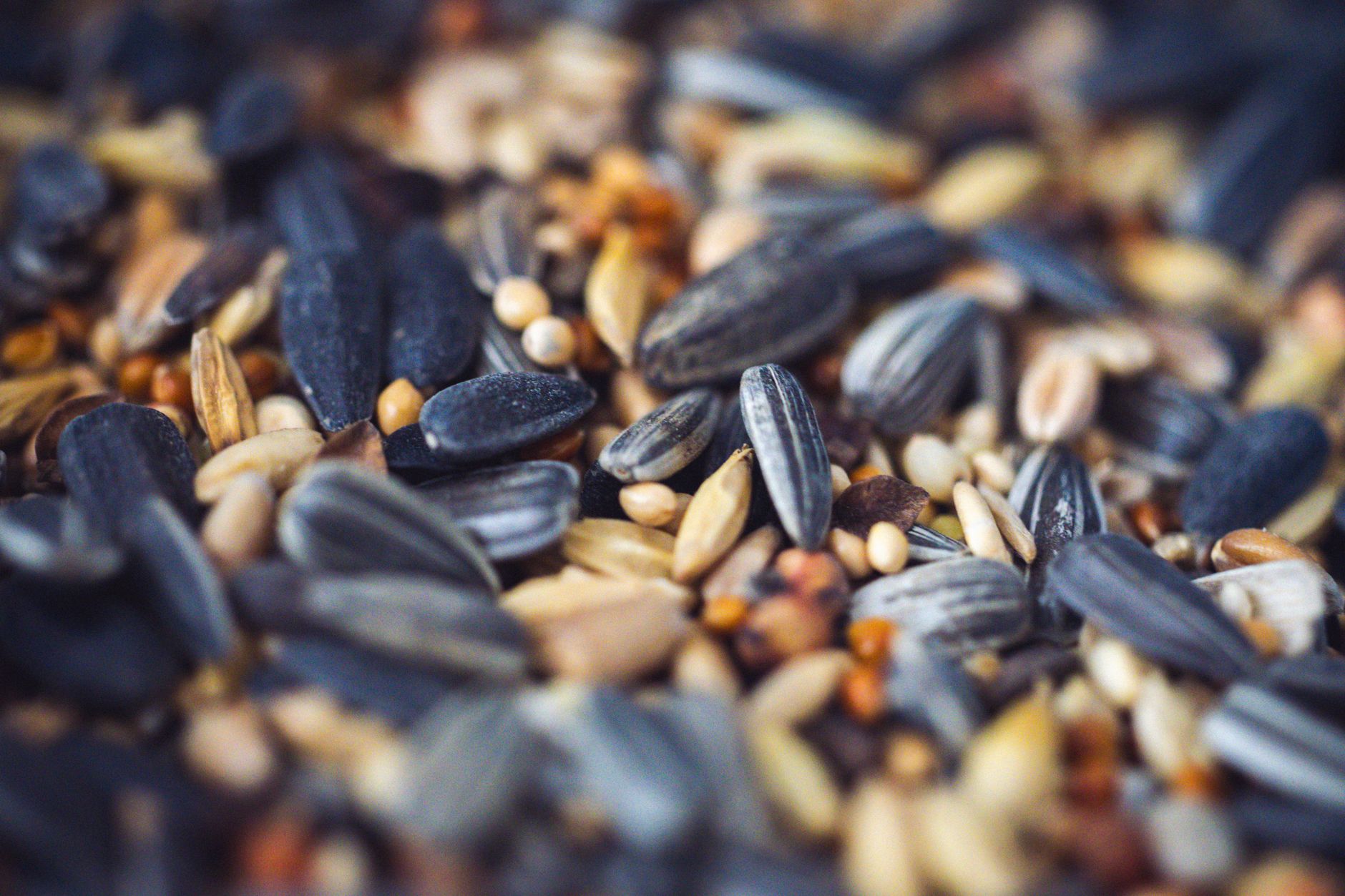 Foto: Patrick
White millet is a ground-feeding seed, and that matters for how you use it. It’s small, round, and pale — and it’s the preferred food of sparrows, juncos, and towhees, birds that naturally forage at or near ground level. Throw it in a hopper feeder and half of it ends up on the dirt anyway, so lean into that and use a platform or tray feeder, or scatter it directly on a clean patch of ground.
In the UK, white millet is a reliable draw for reed buntings, yellowhammers, and dunnocks. In North America, dark-eyed juncos — which migrate south in October and return north in April — will reliably show up when millet is on the menu. If you’re not getting junco activity in winter, adding millet to a low tray feeder is usually what’s missing.
Millet and Ground Hygiene
One concern with ground feeding is moisture and mold. Wet millet spoils fast and can cause illness in birds. A few simple rules:
- Don’t scatter more than birds can eat in a day
- Rake and clear uneaten seed before adding fresh
- Avoid ground feeding during extended rainy periods — shift to a covered tray feeder instead
Best used in: Tray feeders, ground scatter, platform feeders Attracts: Sparrows, juncos, towhees, buntings, doves Waste level: Very low when fed correctly
5. Shelled Peanuts
Peanuts are calorie-dense, protein-rich, and beloved by a range of species that often get overlooked in seed-focused setups: blue jays, woodpeckers, nuthatches, and titmice. Offering peanuts in mesh peanut feeders rounds out your feeder system for larger, bolder birds that won’t bother competing at a crowded tube feeder.
Among woodpeckers specifically, shelled peanuts draw downy, hairy, and red-bellied woodpeckers reliably — species that are harder to attract with seed alone. Pair a peanut feeder with a suet cage nearby and you’ll have woodpecker activity most of the year.
The key distinction is shelled versus whole peanuts. Shelled peanuts (no shell) are accessible to smaller birds and require less effort. Whole peanuts in the shell are best for jays and larger corvids — they’ll carry them off and cache them, providing enrichment that goes beyond the feeder itself.
Peanut Safety: What to Watch
Peanuts can harbor aflatoxin, a mold-produced toxin harmful to birds. Always buy from suppliers who market specifically to wild bird feeding — they test for aflatoxin. Never use salted, flavored, or roasted peanuts meant for human snacking. Those coatings and additives are dangerous to birds.
- Buy raw, unsalted peanuts or commercial bird-grade peanuts only
- Store in a cool, dry place and use within 4–6 weeks of opening
- Clean peanut feeders frequently — they accumulate oils that go rancid
Best used in: Wire mesh peanut feeders, platform feeders Attracts: Blue jays, woodpeckers, nuthatches, titmice, crows Waste level: Low to moderate
6. Premium Mixed Seed Blends
 Foto: Jay Brand
A well-formulated mix can do a lot of heavy lifting — covering multiple species across multiple feeder types without requiring you to maintain four separate setups. The word “premium” matters here. Budget mixes are typically padded with red millet, oats, wheat, and flaxseed, which most desirable backyard birds reject entirely. That filler ends up rotting on the ground beneath your feeder and becomes a mold and rodent problem.
Look for mixes that list black oil sunflower, safflower, white millet, and nyjer as the primary ingredients. Some blends include dried fruit or tree nuts, which attract bluebirds, robins, and waxwings that wouldn’t otherwise visit a standard seed feeder. Seasonal mixes formulated for fall and winter often include higher-fat seeds and suet pellets, which help birds maintain body temperature during cold snaps — worth considering if you feed year-round.
What to Look for on the Label
Don’t buy a bag without checking the ingredient list. Red flags to avoid:
- Red millet — birds largely ignore it
- Oats or wheat — filler, adds weight, attracts rodents
- Milo/sorghum (in high amounts) — only ground-feeding sparrows eat it, and only in the western US
Good mixes will have sunflower (black oil or hulled) listed as the first ingredient, with millet and safflower in the top five.
Best used in: Hopper feeders, platform feeders Attracts: Broad range — cardinals, finches, jays, chickadees, sparrows Waste level: Low when mixes are high quality
Quick Comparison: Bird Seed at a Glance
| Seed Type | Top Birds Attracted | Feeder Type | Squirrel Appeal | Approx. Cost |
|---|---|---|---|---|
| Black Oil Sunflower | Chickadees, cardinals, finches | Tube, hopper, platform | High | $ |
| Nyjer/Thistle | Goldfinches, siskins, redpolls | Mesh/tube nyjer feeder | Low | $$$ |
| Safflower | Cardinals, chickadees, doves | Hopper, platform, tube | Very Low | $$ |
| White Millet | Sparrows, juncos, doves | Platform, ground scatter | Moderate | $ |
| Shelled Peanuts | Jays, woodpeckers, nuthatches | Mesh peanut feeder | High | $$ |
| Premium Mix | Broad species range | Hopper, platform | Moderate | $$–$$$ |
Summary: The Top Picks by Goal
 Foto: Jay Brand
Not every feeder setup needs six seed types. Match your seed choices to what you’re actually trying to accomplish:
To attract the widest variety of birds: Start with black oil sunflower as your base — it’s the most universally accepted seed. Add a separate nyjer feeder if you want finches, and scatter white millet on a platform for ground-feeders. That three-seed setup covers roughly 80% of common backyard species in North America and the UK without overcomplicating things.
To deter squirrels and pest birds: Safflower is your best option. Replace sunflower with safflower in your main hopper and watch the squirrel traffic drop. Pair it with nyjer in a dedicated finch feeder for a pest-resistant setup that still delivers strong variety.
To attract specific species:
- Woodpeckers → shelled peanuts or suet
- Goldfinches → nyjer (thistle) exclusively
- Cardinals → safflower or black oil sunflower in a hopper feeder
- Juncos and sparrows → white millet on a platform or ground
For low-maintenance feeding: A high-quality premium blend in a large hopper feeder handles most situations. Avoid cheap mixes with filler seeds — they create waste and attract rodents.
For budget management: Black oil sunflower delivers the best return per dollar. Buy it in 20–40 lb bags from farm supply stores or warehouse clubs, where the price drops to $0.40–$0.60 per pound. Store bulk seed in a lidded metal trash can to keep moisture and pests out.
Whatever seeds you choose, freshness matters as much as variety. Store seed in a sealed container in a cool, dry space, clean feeders every two weeks with a diluted vinegar solution, and remove wet or molded seed immediately.
Ready to build out your feeder station? Start with black oil sunflower and a quality nyjer setup — those two alone will transform your backyard into a genuine hotspot. Look for trusted brands that carry aflatoxin-tested peanuts and high-quality no-waste blends at your local wild bird specialty store or online. Your local birds will show up within the week.
Frequently Asked Questions
Why shouldn’t you use cheap wild bird seed mixes?
Cheap wild bird mixes are 60-70% red millet, milo, and wheat that most backyard birds actively reject. This leads to wasted seed, ground mess, and rodent problems.
What’s the best single bird seed to buy?
Black oil sunflower seeds are the closest thing to universal bird food. Thin shells let smaller birds crack them easily, and high fat content (28% oil) attracts cardinals, chickadees, finches, nuthatches, and goldfinches.
Are hulled sunflower chips worth buying despite the higher cost?
Yes, if you want zero debris beneath your feeder. The shell is already removed, eliminating the shell pile problem entirely, though they cost more per pound.


