So you’re thinking about adding a reptile to the household — maybe alongside your dog or cat, maybe as your first scaly family member. The question everyone asks first: what do I actually need to set up a reptile terrarium?
The list itself isn’t long: a correctly-sized enclosure, a heat source on a thermostat, lighting, substrate, and hides. What trips up beginners isn’t not knowing the items — it’s not knowing the why behind each one, or where the non-negotiables actually are.
Most first-year reptile losses trace back to three recurring mistakes: wrong enclosure size, incorrect temperatures, or cutting corners on equipment. This guide covers all three.
What Size Terrarium Does a Beginner Reptile Actually Need?
This is where most beginners go wrong first. The instinct is to start small — a tiny tank, “just to see if they like it.” Reptiles aren’t fish. They need space to thermoregulate, move, hide, and express natural behaviors. A cramped enclosure causes chronic stress, suppresses immune function, and leads to repeated illness.
The right size depends entirely on the species. A 20-gallon tank that works fine for a juvenile leopard gecko would be dangerously cramped for a bearded dragon.
General sizing rules to start with:
- Leopard geckos: 20-gallon long minimum for adults
- Corn snakes: 40-gallon breeder for adults
- Bearded dragons: 120-gallon (4’ x 2’ x 2’) for adults
- Ball pythons: 4’ x 2’ x 2’ for adults
- Blue tongue skinks: 4’ x 2’ x 2’ for adults
For juveniles, you can often start smaller — but plan ahead. Most commonly recommended beginner reptiles will outgrow a starter tank within 12–18 months.
Glass vs. PVC vs. Screen: Which Material Should You Choose?
Glass tanks are the most widely available and work well for desert species that need low humidity. They’re heavier, and maintaining humidity for tropical species in a glass tank with a screen top is an uphill battle.
PVC enclosures retain heat and humidity far better, making them the practical choice for ball pythons and other tropical reptiles. Brands like Vision Cages and Reptile Sciences run $200–$400 for a quality PVC build, but they outperform glass equivalents on thermal stability from day one.
Screen-top enclosures bleed heat and humidity constantly. If you’re keeping a species that needs warm, humid conditions, a screen top will work against you — you’ll spend more on heating and still struggle to hold stable parameters.
For true beginners keeping desert species, a standard glass tank with a screen top works fine. Tropical species from the start? Budget for PVC, or at minimum get a glass tank with a sliding front door panel.
What Equipment Do You Need to Set Up a Reptile Terrarium?
 Foto: jarmoluk
Here’s the honest list — nothing you can skip, nothing you can substitute on the cheap:
Non-negotiables:
- Enclosure (sized correctly for your species)
- Heat source (under-tank heater, radiant heat panel, or basking bulb)
- Thermostat (non-optional — it prevents cooking your animal)
- UVB lighting if your species requires it
- Digital thermometer with probe — at least two, one for the warm side and one for the cool side
- Hygrometer to measure humidity
- Substrate appropriate for the species
- At least two hides (warm side and cool side)
- Water dish
- Food dish if applicable
Commonly overlooked items that matter:
- A digital timer for lights (reptiles need consistent photoperiods)
- Cage locks or clips — especially important in homes with cats
- A temperature gun for spot-checking surface temps
The thermostat deserves extra emphasis. Reptile heating equipment can malfunction and overheat. A thermostat wired between your heat source and the outlet prevents temperature spikes that will kill your animal. Inkbird and Herpstat both make reliable entry-level units for $30–$60. That’s a fraction of what an emergency exotic vet visit costs — and it’s the difference between a recoverable equipment failure and a dead reptile.
How Do You Set Up Heat and Lighting the Right Way?
Reptiles are ectothermic — they can’t regulate body temperature internally. They rely entirely on their environment. Your terrarium must provide a thermal gradient: a distinct warm end and a cool end, so your reptile can position itself wherever it needs to be.
What Temperature Gradient Do Reptiles Need?
The specific numbers vary by species, but the structure is consistent: a hot basking spot, a warm ambient zone, a cool zone, and a nighttime temperature that drops slightly but stays safe. Never let your entire enclosure sit at one temperature — it removes your reptile’s ability to thermoregulate, with the same effect as locking a person in a room with no way to warm up or cool down.
For a bearded dragon as an example:
| Zone | Temperature |
|---|---|
| Basking spot (surface) | 105–115°F / 40–46°C |
| Warm side ambient | 90–95°F / 32–35°C |
| Cool side ambient | 75–85°F / 24–29°C |
| Nighttime low | 65–70°F / 18–21°C |
For a ball python:
| Zone | Temperature |
|---|---|
| Warm hide (surface) | 88–92°F / 31–33°C |
| Ambient warm side | 80–85°F / 27–29°C |
| Cool side ambient | 75–80°F / 24–27°C |
| Nighttime low | 72–75°F / 22–24°C |
Always verify the temperature requirements for your specific species before purchasing any equipment. Chronic exposure to incorrect basking temperatures causes long-term metabolic damage — problems that may not show up clinically for months.
Do All Reptiles Need UVB Lighting?
No — but more species benefit from UVB than most beginners realize. Ball pythons and other nocturnal snakes can survive without it (though low-level UVB is increasingly recommended even for them). Most diurnal lizards — bearded dragons, blue tongue skinks, water dragons, iguanas — require UVB to metabolize calcium properly.
Without UVB, diurnal lizards develop metabolic bone disease (MBD), a painful and progressive condition that causes soft, deformed bones. It’s entirely preventable. It’s also irreversible once it advances past early stages.
What to buy:
- Linear T5 HO (high output) UVB bulbs are the gold standard — Arcadia 12% or Reptisun 10.0 for desert species, Arcadia 6% or Reptisun 5.0 for forest species
- Compact spiral UVB bulbs have weaker, inconsistent output and aren’t recommended for most species
- Replace UVB bulbs every 6–12 months even if they still produce visible light — UV output degrades well before the bulb burns out
Put your UVB fixture on a timer. Most reptiles need 10–14 hours of light in summer and 8–10 hours in winter to mimic natural photoperiods. Consistent light cycles regulate appetite and activity — skipping this contributes to behavioral problems over time.
Which Reptile Is Best for a First-Time Owner?
 Foto: kaboompics
If you haven’t picked your species yet, this is the single most consequential decision you’ll make. Every other element of your setup flows from it. Some commonly recommended “beginner reptiles” are actually quite demanding. Others are genuinely forgiving of a learning curve.
| Species | Size | Lifespan | Difficulty | Key Challenge |
|---|---|---|---|---|
| Leopard Gecko | 8–10 inches | 15–20 years | Easy | Correct floor temps |
| Corn Snake | 3–5 feet | 15–20 years | Easy | Escape prevention |
| Ball Python | 3–5 feet | 25–30 years | Easy–Medium | Humidity (60–80%) |
| Bearded Dragon | 18–24 inches | 10–15 years | Medium | UVB + diet complexity |
| Blue Tongue Skink | 18–24 inches | 15–20 years | Medium | Varied diet |
| Crested Gecko | 8 inches | 15–20 years | Easy | Heat sensitivity |
Leopard geckos are the most commonly recommended starting point for good reason: they’re small, handleable, accept a straightforward diet of gut-loaded insects, and have more forgiving temperature requirements than most species. A single 20-gallon long, an under-tank heater on a thermostat, two hides, and a shallow water dish — that’s the full setup.
Crested geckos are an excellent alternative, particularly in homes where ambient temperatures stay between 68–76°F. They’re unique in that they can overheat at temperatures many other reptiles find comfortable, so they’re not a practical choice in warm climates without reliable air conditioning.
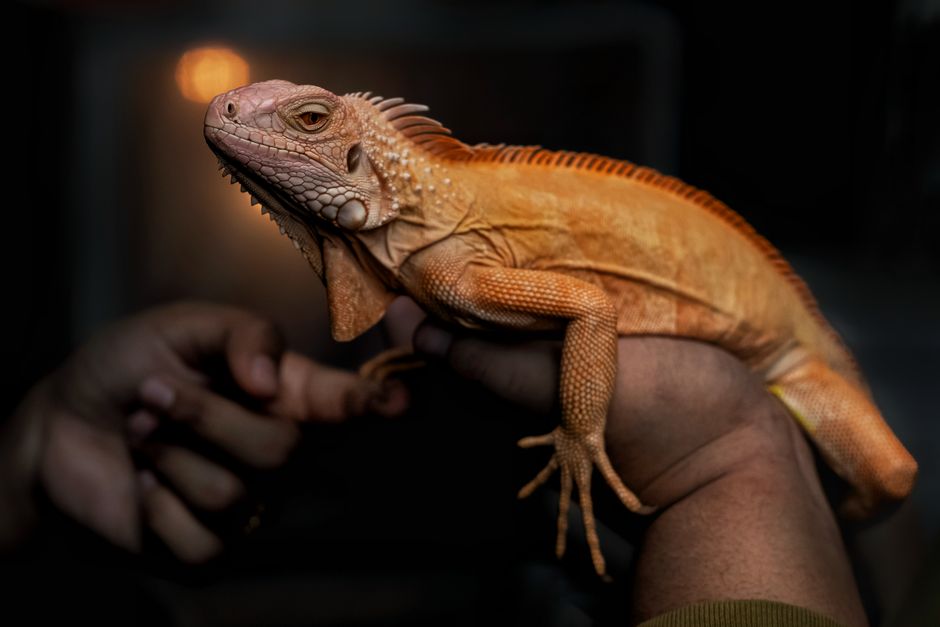
Avoid these as a first reptile regardless of what the pet store tells you: iguanas (fast-growing, frequently aggressive when sexually mature, require significant free-roam space), chameleons (extremely sensitive to air circulation, temperature swings, and hydration delivery — air flow alone trips up experienced keepers), and any wild-caught specimens (heavy parasite loads, high baseline stress, unpredictable feeding behavior).
What Substrate Should You Use in a Reptile Terrarium?
Substrate is the material lining the bottom of your enclosure. It directly affects humidity, hygiene, natural behavior — and safety. Several substrates still widely sold in pet stores are genuinely harmful to specific species.
Substrate options by use case:
- Bioactive soil mix (topsoil + playsand + organic leaf litter) — excellent for naturalistic setups, supports live plants and isopod/springtail cleanup crews
- Coconut coir (coco fiber) — good moisture retention, works well for tropical and semi-arid species
- Reptile sand — fine for true desert-adapted adults, avoid for juveniles (impaction risk from accidental ingestion)
- ABG mix (Aaron’s Bioactive Ground mix) — the standard for tropical and arboreal species
Avoid these entirely:
- Cedar or pine shavings — the aromatic oils are toxic to reptiles
- “Calci-sand” or “vita-sand” — marketed as supplemental calcium delivery, doesn’t deliver as claimed, still poses impaction risk
- Any loose particle substrate for juvenile bearded dragons under 6 inches — impaction is fast, often fatal, and entirely preventable
For beginners who want to keep maintenance simple while learning their animal’s habits, reptile carpet, slate tiles, or paper towels are completely valid options. They’re not naturalistic, but they’re easy to clean and eliminate impaction risk while you’re still developing an eye for your animal’s behavior.
How Do You Cycle and Test Your Terrarium Before Adding a Reptile?
 Foto: Andy Barbour
Never put a reptile into a brand-new, unchecked enclosure. Run the full setup — heat, lights, everything — for at least 48–72 hours before your animal arrives.
During that window:
- Verify warm side and cool side temperatures using probes left in position overnight
- Check your basking spot’s surface temperature with a temperature gun — surface temps run significantly hotter than ambient readings and are what actually matter for basking behavior
- Measure humidity at both ends of the enclosure
- Confirm your thermostat is holding temperatures steady rather than cycling wide
This dry run catches equipment failures before they become animal emergencies. It also lets you adjust lamp height, hide placement, and positioning without working around a stressed reptile.
When your animal arrives, don’t handle it for at least 7–10 days. Let it settle, drink, and explore on its own schedule before you initiate contact. Handling stress in the first week is a leading driver of new-reptile feeding refusals and immune suppression — problems that are frustrating to troubleshoot and entirely avoidable.
Your first reptile terrarium doesn’t need to be elaborate. It needs to be correct. Nail the enclosure size, establish a real thermal gradient, match your substrate to your species, and test everything before your animal moves in. Those four things separate keepers whose animals thrive from those who cycle through vet visits wondering what went wrong.
If you’re still undecided on species, leopard geckos and corn snakes remain the most reliably beginner-friendly choices in any best beginner reptile terrarium setup guide — not because they’re uninteresting, but because their setups are straightforward enough to master quickly and their behaviors are legible enough that you’ll actually learn to read your animal. That knowledge transfers directly to every more demanding species you keep later.
Decide on your species first. Build your equipment list around its specific requirements. The essentials covered here are genuinely all you need to start right.
Frequently Asked Questions
What size terrarium does a beginner reptile actually need?
Size depends on the species. Leopard geckos need 20-gallon tanks minimum, while bearded dragons require 120-gallon (4’ x 2’ x 2’) enclosures. Most beginner reptiles will outgrow starter tanks within 12–18 months, so plan for adult size from the start.
What are the three most common mistakes beginners make with reptile terrariums?
Wrong enclosure size, incorrect temperatures, and cutting corners on equipment like proper heating and lighting. These mistakes cause chronic stress, suppress immune function, and lead to repeated illness in first-year reptiles.
Which is better for a beginner reptile: glass, PVC, or screen enclosure?
Glass tanks work well for desert species and are widely available, but maintaining humidity for tropical species is difficult. PVC enclosures retain heat and humidity much better, making them ideal for tropical reptiles and easier for beginners.


